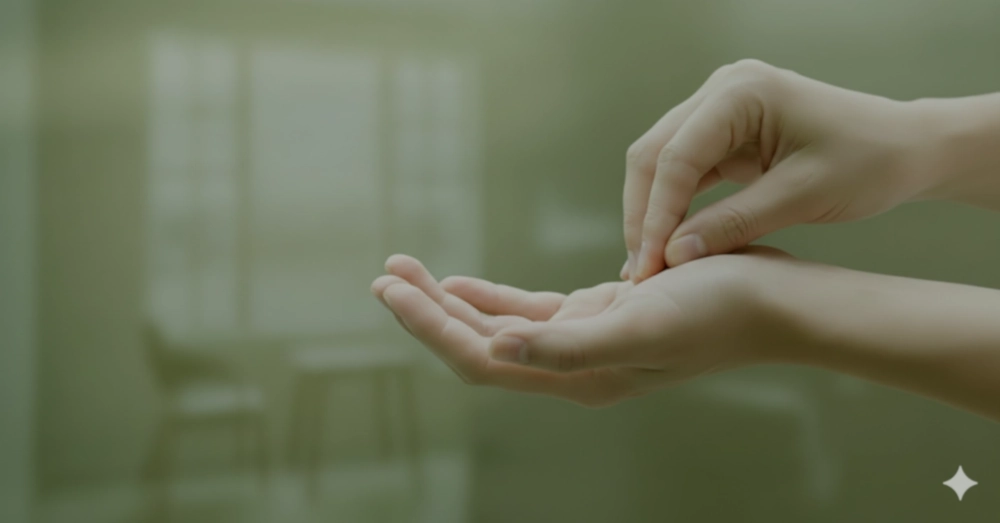
What is Acupressure?
Acupressure is a practice from Traditional Chinese Medicine (TCM): pressing specific points on the body, usually with the fingers or thumbs. It uses the same points as acupuncture, without needles.
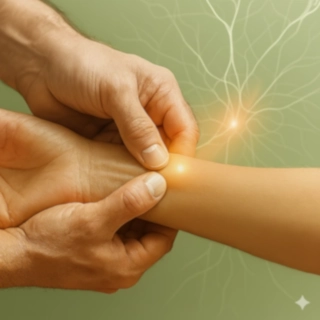
In TCM theory, the points lie on meridians, channels that carry Qi (pronounced "chee"), the body's vital energy. Health is described as Qi flowing freely, and discomfort as Qi that is blocked; pressing a point is meant to restore the flow. These are traditional concepts, and this guide presents them that way.
Browse by Concern
Choose a concern to see the points traditionally used for it.
Pain
Head & Senses
Digestion
Sleep & Stress
Women's Health
Everyday Relief
Alongside Medical Care
Tradition and Research
Traditional view: In TCM, points lie on meridians, channels that carry Qi. Pressing a point is meant to restore the flow of Qi along its meridian. This is the framework the point and meridian pages in this guide follow.
Research view: Meridians and Qi are concepts of TCM theory, not of modern anatomy, and how pressing a point might work is not established. Where clinical trials exist, this guide says so and names its source; elsewhere it describes traditional use only.
What Acupressure Can and Can't Do
What it can be
A simple self-care practice: pressing points on the body that Traditional Chinese Medicine (TCM) describes, to ease everyday discomfort and to relax. It needs no equipment and costs nothing.
What research says
For a few uses there is some evidence. A 2025 Cochrane review of clinical trials found that stimulating PC-6 on the inner wrist, alongside anti-nausea medicine, may reduce nausea and vomiting after surgery compared with a sham treatment. For most other uses, good-quality research on self-applied acupressure is lacking.
What it can't do
It does not replace a diagnosis or medical treatment, and it is never a response to an emergency. Most of what this guide describes is traditional use in TCM, not a proven effect, and it is labelled that way. See when not to self-treat.
When to Use
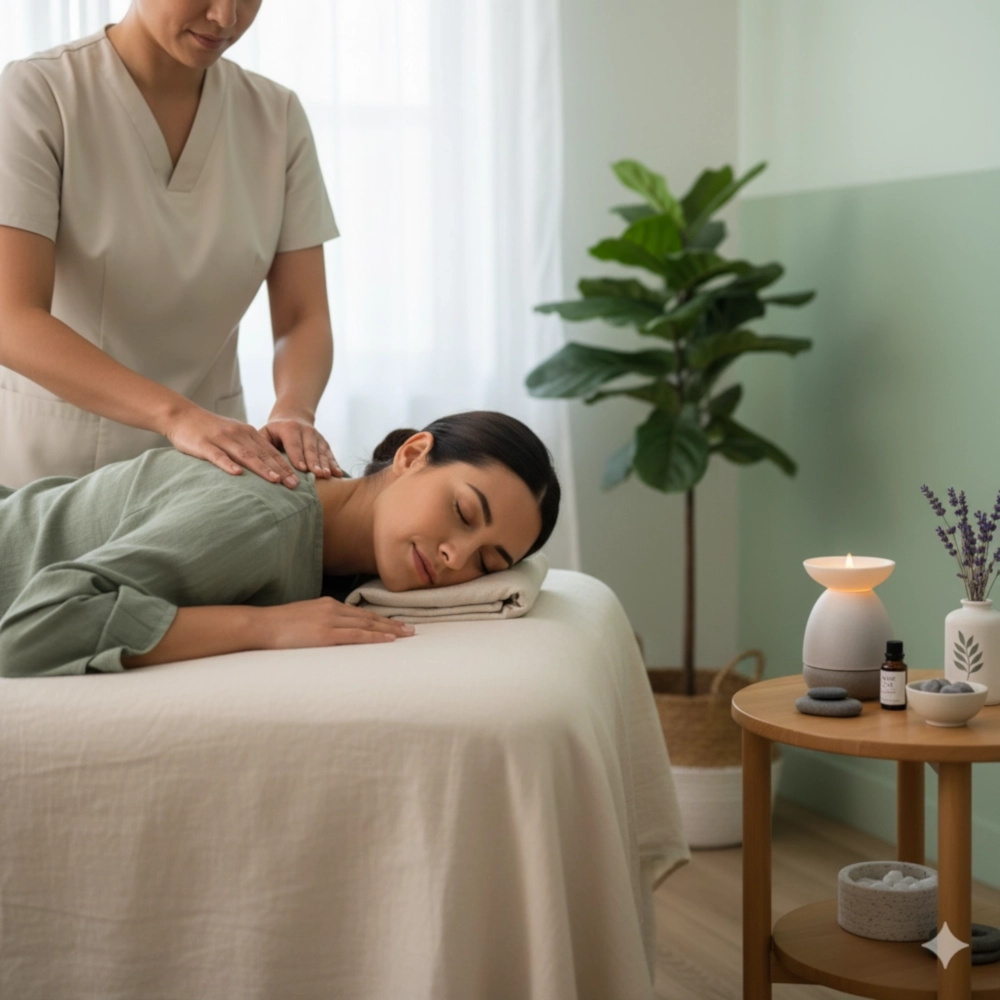
Acupressure is a self-care practice you can use whenever you feel everyday discomfort or want a moment of relaxation.
In the moment: Press a point for a few minutes during an everyday complaint, such as a tension headache or a bout of nausea.
As a routine: Make it part of a daily or weekly relaxation habit.
Alongside other care: Use it next to treatment from your doctor, or therapies such as massage, acupuncture or physical therapy, never instead of them.
Not for emergencies: For chest pain, signs of a stroke, a serious seizure or trouble breathing, call your local emergency number. See when not to self-treat.
Practical Advantages
Nothing to take: No medicine and no equipment, only your hands.
Cost-free: Once you learn the techniques, it needs no special equipment or professional sessions.
Self-administered and Accessible: It can be performed on oneself at any time and location.
Gentle by design: Press gently, stop if it hurts, and read the precautions on each point page first.
Explore the Meridians
Acupressure meridians are invisible, network-like channels in the body, originating from Traditional Chinese Medicine (TCM) theory, through which Qi (vital energy) flows to nourish organs and tissues.
Lung Meridian
手太阴肺经 - Shǒu Tàiyīn Fèi Jīng
Large Intestine Meridian
手阳明大肠经 - Shǒu Yángmíng Dàcháng Jīng
Stomach Meridian
足阳明胃经 - Zú Yángmíng Wèi Jīng
Spleen Meridian
足太阴脾经 - Zú Tàiyīn Píjīng
Heart Meridian
手少阴心经 - Shǒu Shàoyīn Xīn Jīng
Small Intestine Meridian
手太阳小肠经 - Shǒu Tàiyáng Xiǎochángjīng
Bladder Meridian
足太阳膀胱经 - Zú Tàiyáng Pángguāng Jīng
Kidney Meridian
足少阴肾经 - Zú Shàoyīn Shèn Jīng
Pericardium Meridian
手厥阴心包经 - Shǒu Juéyīn Xīnbāo Jīng
Triple Energizer Meridian
手少阳三焦经 - Shǒu Shàoyáng Sānjiāo Jīng
Gallbladder Meridian
足少阳胆经 - Zú Shàoyáng Dǎn Jīng
Liver Meridian
足厥阴肝经 - Zú Juéyīn Gān Jīng
Governing Vessel
督脉 - Dū mài
Conception Vessel
任脉 - Rèn mài
Extra Points
其他穴位 - Qítā Xuéwèi

Cautions and Side Effects
Acupressure is generally safe with minimal side effects. However, there are some important considerations:
Pregnancy: Some points, among them LI-4, SP-6 and the points on the abdomen and the sacrum, are traditionally avoided in pregnancy; each one says so on its page. Always consult a healthcare professional before trying acupressure if you are pregnant.
Injuries: Avoid applying pressure to open wounds, bruises, or areas with swelling or inflammation.
Underlying Conditions: If you have a serious medical condition, such as heart disease or cancer, consult your doctor before starting any new therapy.
General Precautions: Start with gentle pressure and gradually increase intensity. Sessions should typically last 1-3 minutes per point.
Side Effects: Pressing a point can leave mild soreness or bruising. If you experience any severe pain or unusual symptoms, stop immediately and seek medical advice.
About This Guide
A free, ad-free reference with no sign-up and no tracking cookies. Tradition and research are kept apart and labelled, and every page lists the sources it relies on at its foot. Read how the guide is written and see all sources.