HT - Heart Meridian
手少阴心经 - Shǒu Shàoyīn Xīn Jīng
In TCM theory, a channel (meridian) links an internal organ system with a line of points on the surface of the body.
In TCM, the Heart channel is paired with the Small Intestine channel. Traditional teaching links the Heart with the blood and blood vessels, with the mind (Shen), sleep and memory, with the tongue and speech, and with the emotion of joy.
Meridian Pathway & Flow
Direction
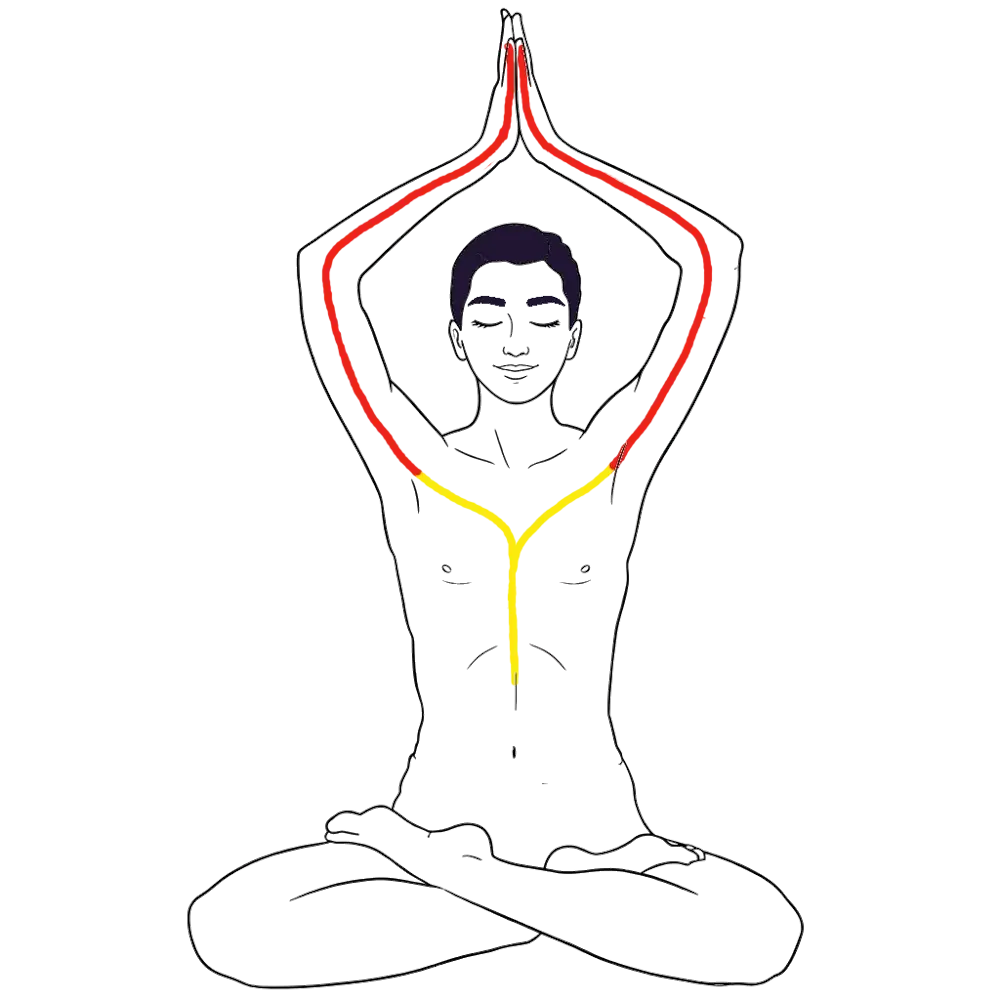
From the chest to the hand (HT-1 to HT-9)
Pathway
- Starts: HT-1, in the centre of the armpit
- Arm: Down the inner side of the arm and the little-finger side of the forearm to the wrist
- Ends: HT-9, at the corner of the little fingernail on the ring-finger side
- Internal course (TCM theory): Begins in the heart; one branch runs down through the diaphragm to the small intestine
- Next channel (TCM theory): Links to the Small Intestine channel at SI-1 on the little finger
Traditional Organ-Clock Time
11 AM – 1 PM
Traditional Functions (TCM)
The Heart in TCM theory
- Governs the blood and blood vessels
- Houses the mind (Shen)
- Is linked with sleep and memory
- Is linked with the tongue and speech
- Is linked with sweating
- Is linked with the emotion of joy
Essential Acupoints
Select a point to see its location, how to find it, and its traditional uses.
Traditional Applications
In TCM, points on this channel are traditionally used for
- Anxiety and restlessness
- Difficulty sleeping
- Poor memory and concentration
- Night sweats
HT Routines
Heart Channel Routine (5 minutes)
- Sit or lie down comfortably
- Press HT-7 gently for 1 minute on each wrist
- Press HT-3 gently for 30 seconds on each arm
- Breathe slowly throughout
All HT Points
Select a point to see its location, how to find it, and its traditional uses.
Precautions
Pressure
- Use gentle pressure on the Heart channel points
Chest symptoms
- For chest pain, pressure or tightness, call your local emergency number. Do not use acupressure instead