Where bloating comes from
MedlinePlus describes abdominal bloating as a belly that feels full and tight, and may look swollen. Much of it is gas. Everyone has gas, and most people pass it about 13 to 21 times a day. It has two sources: air you swallow, and gas made when bacteria in the intestines break down food that was not fully digested. Some foods give some people gas and not others.
Common causes of bloating include swallowing air, constipation, reflux (GERD), irritable bowel syndrome, lactose intolerance, overeating, weight gain and oversensitive nerves in the gut. Some medicines and foods high in fructose or sorbitol can cause it too. Less common but more serious causes include fluid in the belly (ascites), celiac disease, pancreatic problems, tumors in the belly and ovarian cancer. That is why bloating that keeps coming back, or comes with the signs below, is a reason to see a provider rather than to keep pressing points.
The Bloating page is the reference; this post explains the routine and the evidence behind it. Related pages: Constipation, IBS and Heartburn. If the belly hurts more than it feels full, the stomach cramps post lists the belly pain that needs help right away.
What research says
We found no Cochrane review of acupressure or acupuncture for bloating, so little high-quality research exists to say what pressing these points does. The points below are tradition, labelled as such. The habits further down are what MedlinePlus advises.
The points
Traditional use: in TCM, points such as CV-12, ST-36 and SP-15 are traditionally used for bloating and fullness. Each point's page shows where to find it and when to skip it.
- Main points: CV-12 Middle Duct (Zhōng wǎn) on the upper belly, ST-36 Leg Three Miles (Zú sān lǐ) below the knee, and SP-15 Great Horizontal (Dà héng) on the side of the belly.
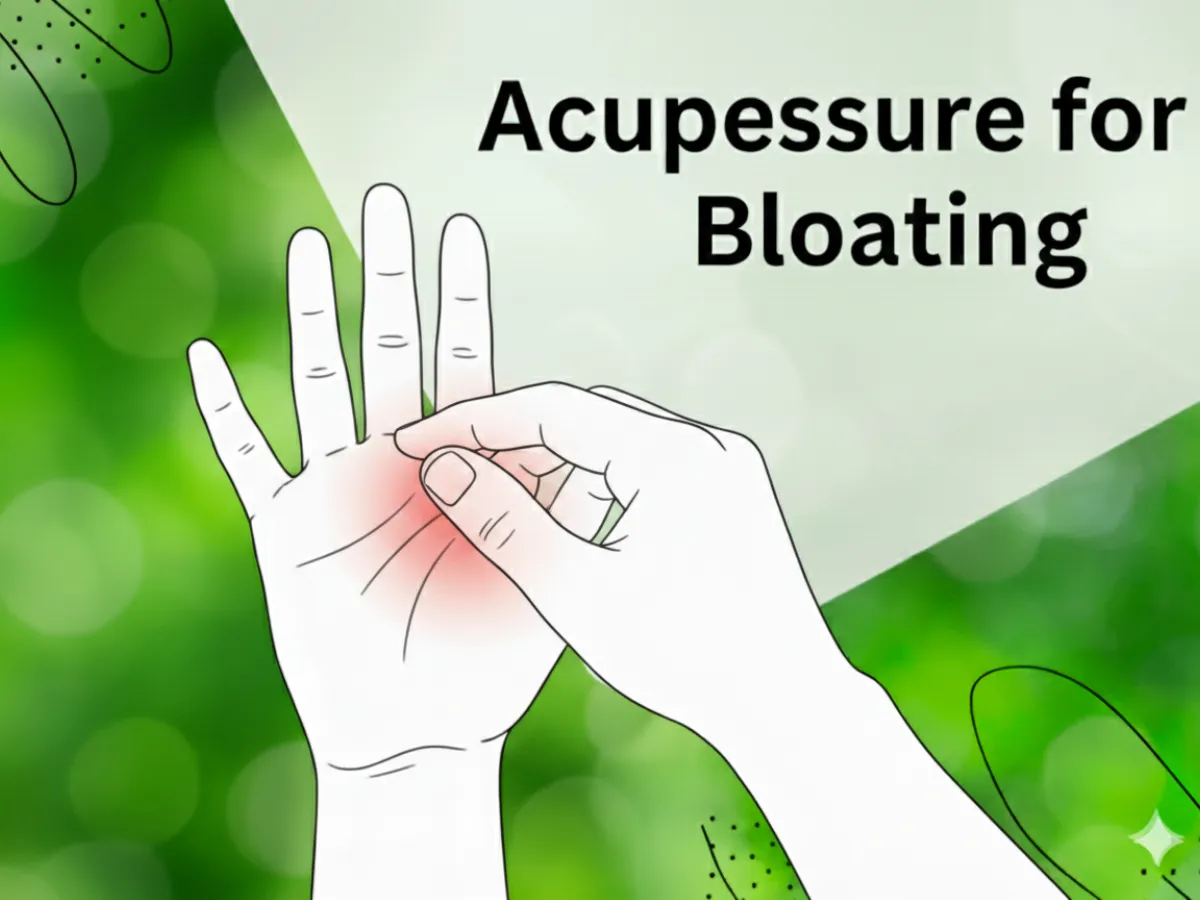
- Optional: LI-4 Joining Valley (Hé gǔ) on the hand, and ST-25 Heaven's Pivot (Tiān shū) beside the navel.
- With nausea: PC-6 Inner Pass (Nèi guān) on the inner forearm. The nausea post covers it in more detail.
- Also listed on the Bloating page: BL-21 Stomach Shu (Wèi shū) on the back and SP-9 Yin Mound Spring (Yīn líng quán) below the inner knee.
How to press
The Bloating routine has the order and timings, 5 to 10 minutes. The idea behind it: a full, tight belly does not want to be pushed. Loose clothing and slow breathing come first. The belly points, CV-12, SP-15 and ST-25, are touched lightly, in slow circles or with flat fingertips, never pushed deep. The firmer pressure goes on the leg, away from the belly.
- Sit comfortably, loosen anything tight around your waist, and breathe slowly into your belly.
- Massage CV-12 gently in clockwise circles for 1 to 2 minutes, pressing as you breathe out.
- Press ST-36 with steady pressure for 1 minute on each leg.
- Press SP-15 gently for 30 seconds on each side, resting on the side of the belly without pushing inward.
- Optional: add LI-4 on each hand, and ST-25 with light pressure on each side of the navel.
- If you feel sick, add PC-6 for 1 minute on each arm.
- Finish with gentle clockwise circles over the belly for 2 to 3 minutes.
If you are new to it, hold each point for 15 to 30 seconds and work up to 1 to 2 minutes. Pressure should be firm but never painful. If pressing the belly hurts, stop: belly pain is on the contact-a-provider list below.
Pregnancy: CV-12, SP-15, ST-25 and LI-4 are not pressed during pregnancy. Use ST-36 and PC-6 only, or ask a trained professional.
Skip: all the belly points with sudden or severe belly pain or swelling, which needs medical care, not pressure. ST-36 after leg surgery or with an injury or infection of the lower leg. LI-4 after hand surgery or injury. PC-6 after a wrist injury or surgery, and ease off if the fingers tingle. Don't press on broken, irritated or blistered skin, bruises or new scars. If you have a bleeding or clotting disorder or low platelets, press more lightly and for less time, or ask your doctor first.
Everyday habits matter more
MedlinePlus suggests:
- eating more slowly, so you swallow less air;
- avoiding chewing gum and fizzy drinks, and drinking plenty of water and non-fizzy drinks instead;
- avoiding foods that give you gas, such as cabbage, beans and onions;
- keeping track of the foods that set it off, such as milk products and some carbohydrates, and avoiding milk products if you have lactose intolerance;
- not smoking;
- dealing with constipation if it is part of it (see the Constipation page).
If symptoms still bother you after these changes, MedlinePlus says to see your provider.
When to contact a provider
MedlinePlus says to contact your provider if bloating comes with:
- belly pain;
- blood in your stools, or dark, tarry stools;
- diarrhea;
- heartburn that is getting worse;
- vomiting;
- weight loss.
Acupressure is not a reason to wait. See also when not to self-treat.