
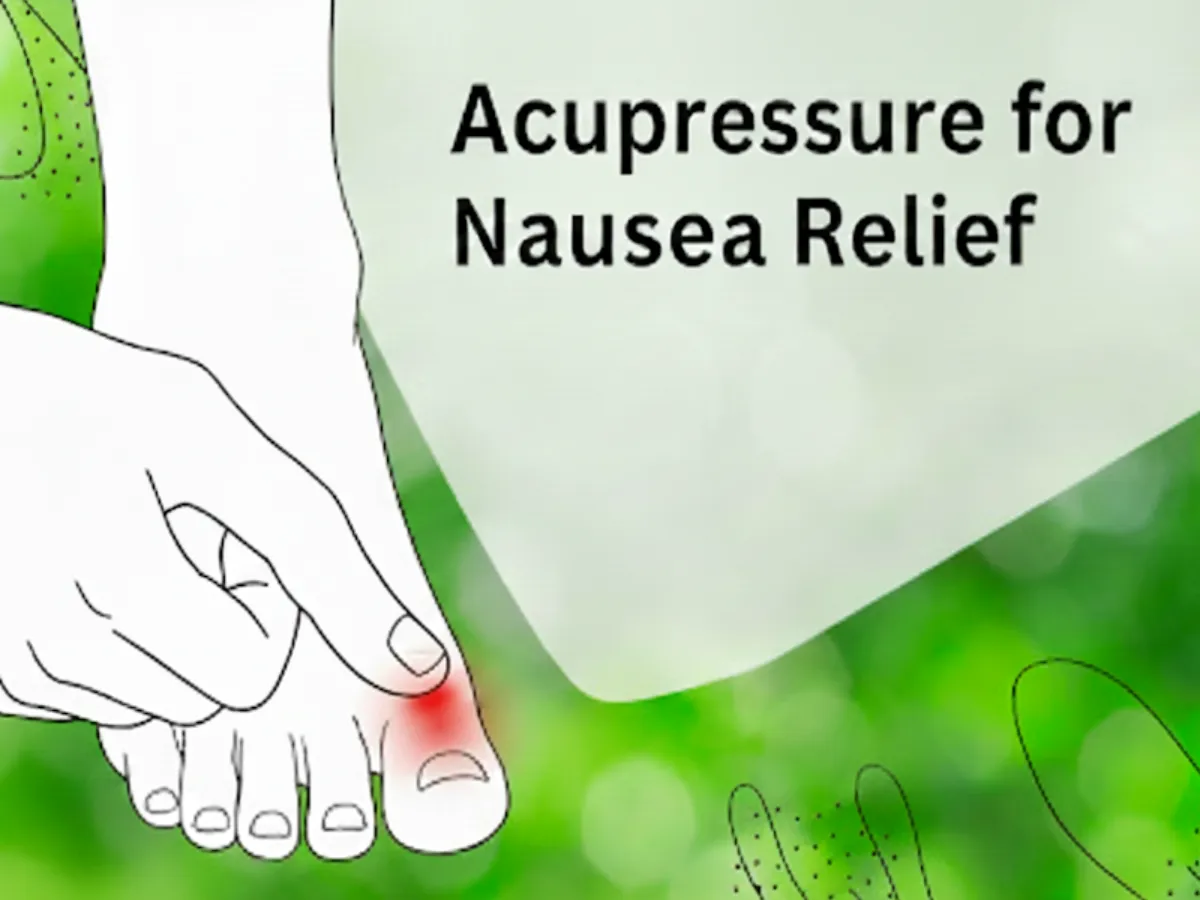
Why PC-6 comes first
PC-6 (Nèi guān, Inner Pass) is on the inner forearm. In Traditional Chinese Medicine it is the main point used for nausea and vomiting. It is also the point that the research below is about: acupressure wristbands are one of the ways PC-6 has been pressed in clinical trials.
Nausea has many causes, among them morning sickness, stomach infections, migraines, motion sickness, food poisoning, some medicines, reflux and ulcers, and a blocked intestine. Pressing a point does not deal with any of these. If you don't know why you feel sick, or it doesn't pass, see the list at the end of this post.
What research says
A 2025 Cochrane review pooled clinical trials of PC-6 stimulation for nausea and vomiting after surgery. It counted needle acupuncture and non-invasive methods such as acupressure wristbands. Compared with a sham treatment, PC-6 stimulation reduced nausea, vomiting and the need for extra anti-nausea medicine, but the reviewers rated the certainty of that evidence as low. Used together with anti-nausea medicine, non-invasive PC-6 stimulation probably reduced the need for more medicine later. The side effects that trials reported were minor and short-lived, such as skin irritation, redness and pain.
That review covers nausea after surgery only. For nausea in early pregnancy, a 2015 Cochrane review judged the evidence for P6 (PC-6) acupressure limited. It found a lack of high-quality evidence for any single treatment, which, the reviewers point out, is not the same as saying the treatments don't work. For motion sickness and other kinds of nausea we have found no review to cite.
The points
Traditional use: in TCM, these points are traditionally used for nausea and vomiting. That is tradition, not a research finding. Each point's page shows where to find it.
How to press
Sit upright or lie down, relaxed, and breathe slowly.
- Find PC-6 on one arm.
- Press with your thumb, straight into the skin. The pressure should be firm, steady and noticeable, but never painful. Start lighter until you know how much feels right.
- Hold for 15 to 30 seconds to begin with. You can work up to 1 to 2 minutes.
- Do the same on the other arm.
- Then rub CV-12 gently, and press ST-36 on each leg. Add SP-4 if you like.
You can repeat this several times a day. Keep the sessions shorter if you do. The whole routine is on the Nausea & Vomit page.
Don't press on broken, irritated or blistered skin, bruises, burns or new scars. If you have a bleeding or clotting disorder or low platelets, press more lightly and for less time, or ask your doctor first.
While you feel sick: sip small amounts of clear liquids often, eat bland foods in smaller meals, stay away from spicy, fatty or salty food, and avoid strong smells.
In pregnancy
Morning sickness has its own page. This guide leaves points on the abdomen out for the whole pregnancy, CV-12 among them, so the morning sickness routine uses PC-6 and ST-36, with SP-4 as an option.
MedlinePlus says acupressure wristbands or acupuncture may help with morning sickness. If you are thinking of acupuncture, talk to your provider first, and look for an acupuncturist trained to work with pregnant women.
Contact your provider if:
- morning sickness does not improve with home remedies
- nausea and vomiting go on beyond the 4th month of pregnancy
- you vomit more than 3 times a day, or cannot keep food or liquid down
- your urine is dark and concentrated, or you urinate very little
- you lose a lot of weight
Contact your provider immediately if you vomit blood or material that looks like coffee grounds.
When to see a doctor
Contact a health care provider immediately if you have:
- a reason to think the vomiting is from poisoning
- vomited for longer than 24 hours
- blood in the vomit
- severe abdominal pain
- a severe headache and a stiff neck
- signs of dehydration, such as a dry mouth, urinating less often, or dark urine
See also when not to self-treat.