
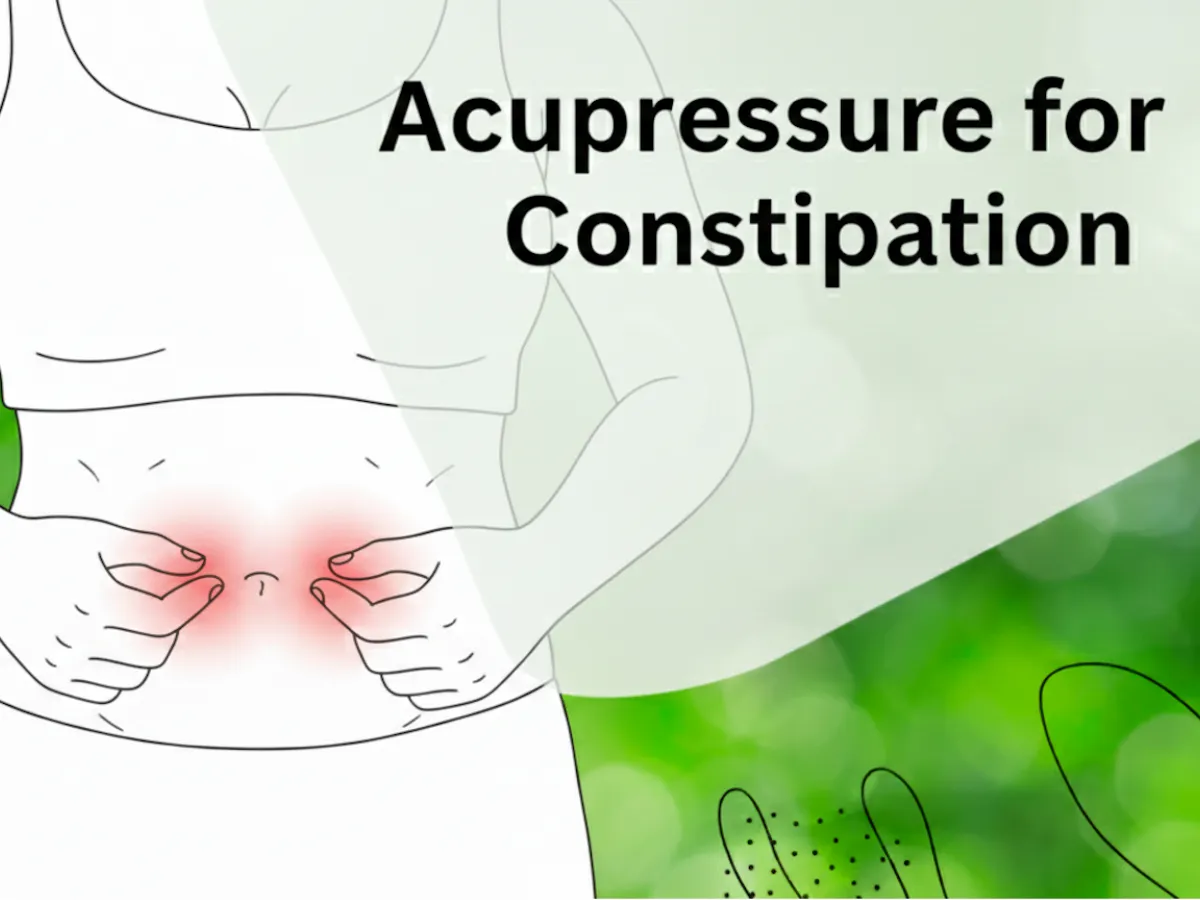
What constipation is
MedlinePlus defines constipation as having fewer than three bowel movements a week, or passing stool less often than you normally do. The stool can harden and dry out, which makes it hard and sometimes painful to pass. Bloating, belly pain and straining often come with it. It is common, and in most cases it is short-lived and not serious.
A daily bowel movement is not required: what matters is a change from your usual pattern. Common causes are not enough fiber, not enough water, too little exercise, and holding it in when you feel the urge. Some medicines and vitamins cause it too, so it is worth asking your provider whether one of yours could be the reason.
The Constipation page is the reference; this post explains the routine and the evidence behind it. Related pages: Bloating and IBS.
What research says
We found no completed Cochrane review of acupressure or acupuncture for constipation, so little high-quality research exists to say what pressing these points does. The points below are tradition, labelled as such. The habits further down are what MedlinePlus advises, and they come first.
The points
Traditional use: in TCM, points such as ST-25, TE-6 and SP-15 are traditionally used for constipation. Each point's page shows where to find it and when to skip it.
- Main points: ST-25 Heaven's Pivot (Tiān shū) beside the navel, TE-6 Branch Ditch (Zhī gōu) on the back of the forearm, and SP-15 Great Horizontal (Dà héng) on the side of the belly.
- Optional: BL-25 Large Intestine Shu (Dà cháng shū) on the lower back, and LI-11 Pool at the Crook (Qū chí) at the elbow.
- To finish: CV-12 Middle Duct (Zhōng wǎn) on the upper belly.
How to press
The Constipation routine takes about 10 minutes. The idea behind it: it is a daily habit, not a quick fix, and the morning suits it, because MedlinePlus advises going to the bathroom at the same time each day, often after breakfast, to train the bowels. The belly points, ST-25, SP-15 and CV-12, are touched lightly, in slow circles, never pushed deep into the belly. The arm points take firmer pressure.
- Place your hands on your belly and breathe slowly, so they rise and fall.
- Massage ST-25 in slow clockwise circles for 2 minutes, lightly, on both sides of the navel.
- Rest your fingertips on SP-15 for 1 minute on each side, with light pressure and without pushing inward.
- Press TE-6 for 1 minute on each arm, between the two forearm bones rather than on them.
- Optional: add LI-11 on each elbow, and BL-25 on the lower back if you can reach it without straining (or a helper can).
- Finish with light circles over CV-12.
If you are new to it, hold each point for 15 to 30 seconds and work up to 1 to 2 minutes. Pressure should be firm but never painful. If pressing the belly hurts, stop: belly pain with constipation is on the contact-a-provider list below.
Pregnancy: ST-25, SP-15 and CV-12 are not pressed during pregnancy. Ask a trained professional instead.
Skip: the belly points with sudden or severe belly pain or swelling, which needs medical care, not pressure. TE-6 after recent abdominal surgery. LI-11 after an elbow injury or surgery. BL-25 if you can't reach it comfortably. Don't press on broken, irritated or blistered skin, bruises or new scars. If you have a bleeding or clotting disorder or low platelets, press more lightly and for less time, or ask your doctor first.
Everyday habits matter more
MedlinePlus suggests:
- exercising regularly, such as walking or swimming at least 3 or 4 times a week;
- drinking plenty of water and other liquids;
- eating more fiber from fruits, vegetables, whole grains, beans, nuts and seeds, and adding it slowly, since a sudden increase can cause bloating and gas;
- not skipping meals, and eating fewer processed and fast foods;
- going when you feel the urge, rather than holding it in;
- keeping a bathroom routine at the same time each day.
Use laxatives only when a provider recommends them.
When to contact a provider
MedlinePlus says to check with your provider if your bowel habits change, and to contact your provider if you:
- have not had a bowel movement in 3 days;
- are bloated or have stomach pain;
- have nausea or are vomiting;
- have blood in your stool.
Acupressure is not a reason to wait. See also when not to self-treat.