
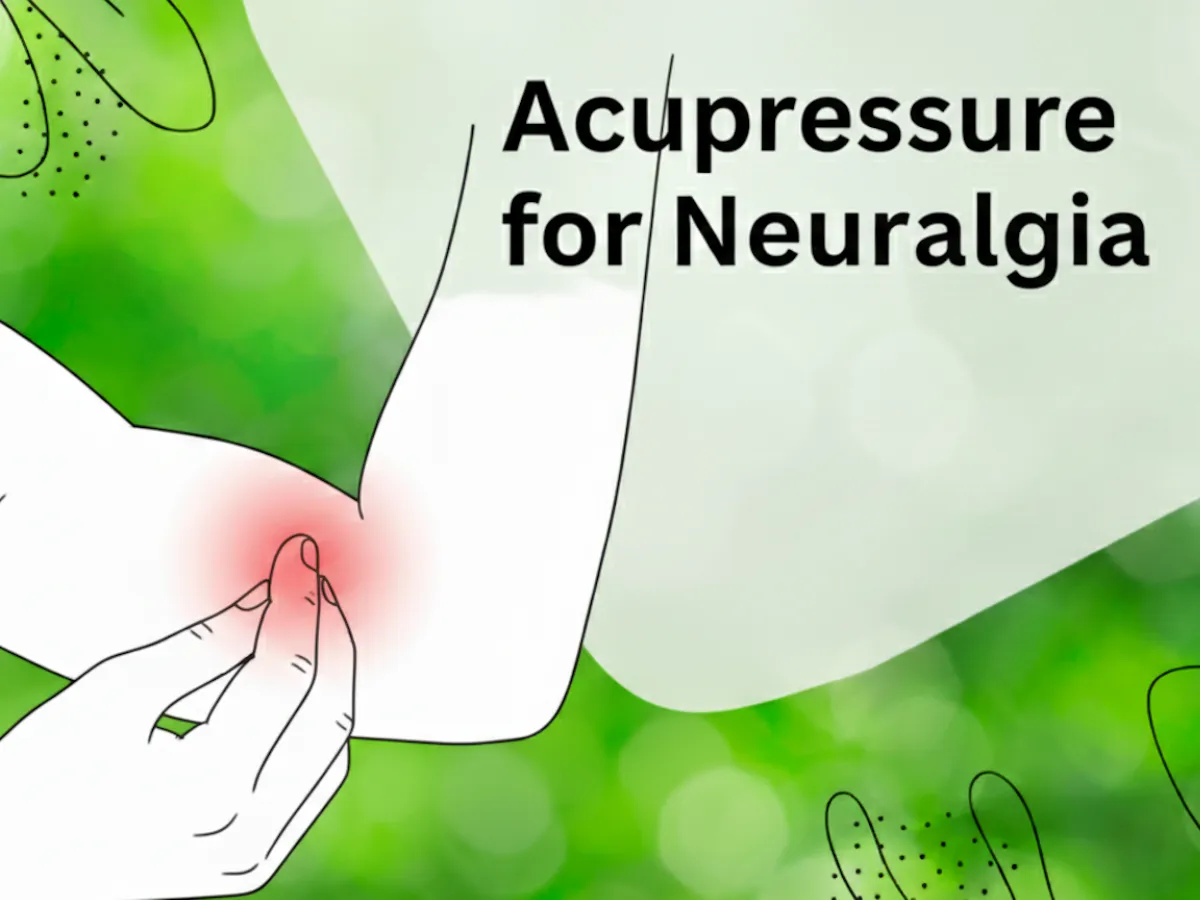
What neuralgia is
MedlinePlus describes neuralgia as a sharp, shocking pain that follows the path of a nerve, caused by irritation of or damage to the nerve. The two most common forms are postherpetic neuralgia, pain that continues after shingles, and trigeminal neuralgia, stabbing or electric-shock-like pain in parts of the face. It is more common in older people but can happen at any age.
Possible causes include diabetes, chronic kidney disease, infections such as shingles or Lyme disease, some cancer medicines, pressure on a nerve from nearby bones or blood vessels, injury or surgery, and conditions such as multiple sclerosis. In many cases the cause is unknown. The pain can be sharp and stabbing or constant and burning, may get worse with movement, and the muscles the nerve serves may become weak.
The Neuralgia page is the reference; this post explains the routine and the evidence behind it. For pain that runs down the back of the leg, see Sciatica; for pain in the teeth or jaw, Dental Pain.
Why the points are far from the pain
MedlinePlus notes that with neuralgia the skin along the nerve can become so sensitive that even a light touch hurts. So the routine does not press on the painful area. Its points are on the hand, the ankle and the lower leg, where pressure can be firm without touching the sore nerve. This matters most for facial pain and for pain after shingles: never press on the painful part of the face, or on a shingles rash or its blisters.
What research says
A 2017 Cochrane review looked for trials of needle acupuncture, given for at least eight weeks, for long-lasting nerve pain in adults. It found six small trials with 462 people, all with pain from nerves outside the brain and spinal cord, and all at high risk of bias. It did not include acupressure.
- Against sham acupuncture (one trial, 45 people), it is uncertain whether acupuncture made any difference to pain.
- Against or added to other therapies, the results favoured acupuncture, but the evidence was very low quality.
The authors concluded there is not enough evidence to support or refute acupuncture for nerve pain in general, or for any specific kind. We found no review of acupressure for neuralgia, so little high-quality research exists. The points below are tradition, labelled as such.
The points
Traditional use: in TCM, points such as LI-4 and BL-60 are traditionally used for nerve pain. Each point's page shows where to find it and when to skip it.
- Main points: LI-4 Joining Valley (Hé gǔ) on the hand, and BL-60 Kunlun Mountains (Kūn lún) at the outer ankle.
- Optional: GB-34 Yang Mound Spring (Yáng líng quán) below the outer side of the knee, LR-3 Great Rushing (Tài chōng) on the top of the foot, and SP-6 Three Yin Intersection (Sān yīn jiāo) on the inner lower leg.
- Also used: ST-36 Leg Three Miles (Zú sān lǐ) below the knee.
How to press
The Nerve Pain routine has the order and timings, 5 to 10 minutes in all.
- Sit or lie in the most comfortable position you can find.
- Press LI-4 with firm pressure, on one hand and then the other.
- Massage BL-60, pinching gently into the hollow beside the outer ankle bone, not on the bone.
- If you like, add GB-34 with moderate pressure.
- If you like, add LR-3, pressing beside the pulse rather than on it, and SP-6.
If you are new to it, hold each point for 15 to 30 seconds and work up to 1 to 2 minutes. Pressure should be firm but never painful. If pressing sets off the nerve pain, stop.
Pregnancy: LI-4, BL-60 and SP-6 are not pressed during pregnancy.
Skip: LI-4 after hand surgery or with a severe hand injury. BL-60 only lightly if you have a bleeding disorder. GB-34 with a severe leg injury or a blood clotting disorder. LR-3 after foot surgery or with very low blood pressure. SP-6 and ST-36 after leg surgery; ST-36 with an injury or infection of the lower leg. Don't press on broken, irritated or blistered skin, bruises or new scars. If you have a bleeding or clotting disorder or low platelets, press more lightly and for less time, or ask your doctor first.
When to contact a provider
MedlinePlus says to contact your provider:
- if you develop shingles;
- if you have symptoms of neuralgia that over-the-counter pain medicines do not relieve;
- if you have severe pain.
Because neuralgia has many causes, a provider looks for the one behind it, and facial or jaw pain may need a dental exam. Treatment depends on the cause, where the pain is and how severe it is, and most neuralgias respond to treatment. Severe pain that keeps going is worth seeing a pain specialist for.
MedlinePlus also notes that with shingles, early treatment may keep neuralgia from developing, and the shingles vaccine greatly lowers the risk of both. That is another reason to see a provider soon after a shingles rash appears, rather than waiting to see whether pain follows.
Acupressure is not a reason to wait. See also when not to self-treat.