What insomnia is
MedlinePlus describes insomnia as trouble falling asleep, staying asleep, or both, so that you get too little sleep or poor-quality sleep and don't feel refreshed when you wake. Acute (short-term) insomnia is common and usually lasts days or weeks; stress at work, family pressures or a traumatic event are common causes. Chronic insomnia lasts a month or longer, and most often it comes from another problem.
Many things can cause it or make it worse:
- Habits: going to bed at a different time each night, daytime naps, a noisy or bright bedroom, spending a long time in bed awake, evening or night shifts, too little exercise, and screens in bed.
- Substances and medicines: alcohol, heavy smoking, too much caffeine or caffeine late in the day, some cold medicines and diet pills, and other medicines, herbs or supplements.
- Health: feeling sad or depressed, stress and anxiety, pain, waking at night to use the bathroom, sleep apnea and pregnancy.
The Insomnia page is the reference; this post explains the routine and the evidence behind it. Related pages: Anxiety, Fatigue and Low Mood and Depression.
When to see a provider
See a provider if insomnia lasts a month or longer: it most often comes from another problem, and that problem needs a provider's care. MedlinePlus also says to contact your provider if:
- you are feeling sad or depressed;
- pain or discomfort is keeping you awake;
- you take a medicine that may be keeping you awake;
- you have been taking sleep medicines without talking to your provider first.
Poor sleep can make you tired and unfocused. If you feel sleepy while driving, pull over and take a break. See also when not to self-treat.
What research says
A Cochrane review of acupuncture for insomnia (Cheuk 2012; 33 trials, 2,293 people; searches up to October 2011) included needle acupuncture, electroacupuncture and acupressure:
- In two trials against no treatment (280 people) and two against sham or placebo (112 people), more people reported better sleep quality with acupressure. But when the authors assumed that people who dropped out had done worse, the benefit was no longer clear.
- Every trial had a high risk of bias, the trials differed in how they defined insomnia and which points they used, the effects were generally small, and publication bias was likely.
The authors concluded that the evidence is not rigorous enough to support or refute acupuncture for insomnia. MedlinePlus says that in the long run, changes in lifestyle and sleep habits work best, and names cognitive behavioral therapy for insomnia (CBT-I) as a talk therapy that may help. So the points below are tradition, labelled as such, and the sleep habits further down come first.
The points
Traditional use: in TCM, points such as HT-7, SP-6 and EXT-2 are traditionally used for trouble sleeping. Each point's page shows where to find it and when to skip it.
- Main points: HT-7 Spirit Gate (Shén mén) at the wrist crease, SP-6 Three Yin Intersection (Sān yīn jiāo) on the inner lower leg, and EXT-2 Hall of Impression (Yìn táng) between the eyebrows.
- For racing thoughts: GV-20 Hundred Meetings (Bǎi huì) on the top of the head.
- For emotional upset: PC-6 Inner Pass (Nèi guān) on the inner forearm.
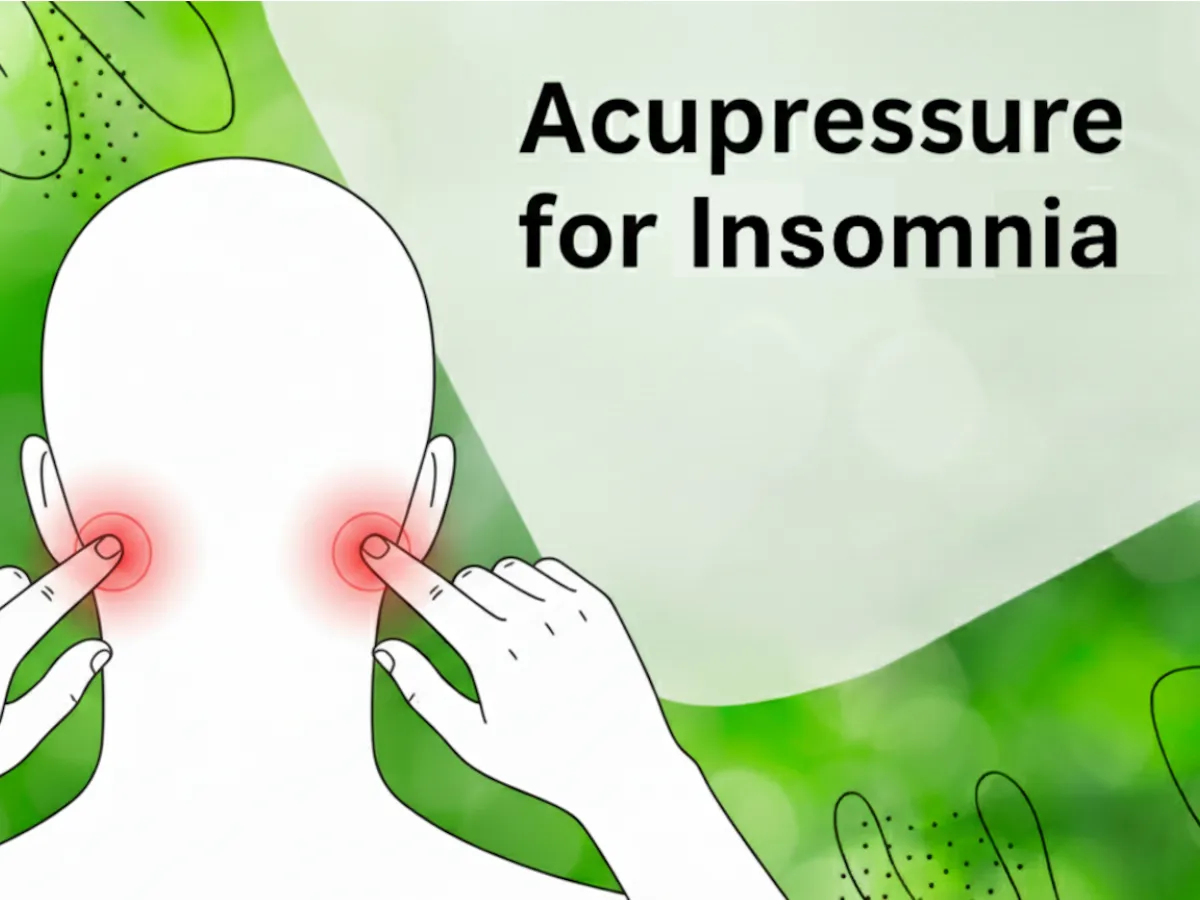
- Optional: EXT-51 Peaceful Sleep (Ān mián) behind the ear.
How to press
The Insomnia routine takes about 15 minutes. The idea behind it: MedlinePlus notes that people with insomnia often worry about getting enough sleep, and the harder they try, the more frustrated they get and the harder sleep becomes. So the routine is not a way to force sleep. It is a calm activity for the half hour before bed, the kind MedlinePlus suggests in place of screens, and every point in it is pressed gently.
- Start 30 to 60 minutes before bedtime. Dim the lights and put screens away.
- Breathe slowly: in for 4 counts, hold for 2, out for 8, ten times.
- Massage HT-7 in slow circles for 2 minutes on each hand.
- Press SP-6 lightly for 2 minutes on each leg, into the soft tissue beside the bone rather than on it.
- Press EXT-2 very gently for 1 to 2 minutes, letting the brow soften.
- For racing thoughts, add GV-20 with light pressure for 1 minute.
- For emotional upset, add PC-6 for 1 minute on each arm.
- Finish with 5 minutes of muscle relaxation, letting each part of the body go loose from the toes to the head.
EXT-51 is optional: press it gently, one side at a time, never into the side of the neck.
If you can't fall asleep within 30 minutes, MedlinePlus advises getting up, going to another room and doing something quiet until you feel sleepy, rather than lying in bed awake.
If you are new to it, hold each point for 15 to 30 seconds and work up to the times above. Pressure should never be painful.
Pregnancy: SP-6 is not pressed during pregnancy. Ask a trained professional instead.
Skip or ease off: HT-7 can stir up strong feelings, its page notes, so keep it gentle and stop if it upsets you. SP-6 after leg surgery. EXT-2 with a nosebleed, a broken nose or an injury to the face. GV-20 after a head injury, and stop if you feel dizzy. PC-6 after a wrist injury or surgery, and ease off if your fingers tingle. EXT-51 with an ear infection or after a neck injury, and stop if you feel dizzy. Don't press on broken, irritated or blistered skin, bruises or new scars. If you have a bleeding or clotting disorder or low platelets, press more lightly and for less time, or ask your doctor first.
Sleep habits come first
MedlinePlus says that in many cases a few lifestyle changes relieve insomnia, though habits built over years can take time to change:
- wake up around the same time each day, and go to bed around the same time;
- use the bed for sleeping, not for eating or working;
- avoid caffeine and alcohol in the evening, and heavy meals in the 2 hours before sleep;
- avoid activity that raises your heart rate in the 2 hours before bed, but walk or exercise for at least 30 minutes on most days;
- skip daytime and evening naps;
- keep the bedroom quiet, dark and at a temperature you like;
- write down what worries you before bed, to move it from your mind to paper.
If you take any medicines, diet pills, herbs or supplements, ask your provider how they may affect your sleep.