
What a hiccup is
A hiccup has two parts. First the diaphragm, the muscle at the base of the lungs that you breathe with, moves on its own. Then the vocal cords close quickly, which makes the "hic" sound.
MedlinePlus notes a few things that shape how to think about them:
- hiccups can start and stop for no obvious reason;
- they often follow something that irritates the diaphragm: eating too fast or too much, spicy food, alcohol, fizzy drinks, a bloated stomach, or nervousness and excitement;
- they usually go away on their own after a few minutes;
- hiccups that last more than a few days or keep coming back are called chronic hiccups. Those need a provider, not only self-care (see the last section).
Acupressure is self-care for an ordinary bout. The Hiccup page is the reference; this post explains the routine and the evidence behind it.
What research says
The only Cochrane review we found is from 2013, on treatments for persistent and intractable hiccups in adults: hiccups that go on and on, not the short bouts most people get.
- It found 4 studies with 305 people, and all of them tested acupuncture techniques, not acupressure.
- The studies had a high risk of bias, none compared acupuncture with a placebo (a fake treatment), and none reported side effects.
- They were too different from each other to pool, and no study of medicines met the review's criteria at all.
The authors concluded that there is not enough evidence to guide the treatment of persistent or intractable hiccups, with or without needles.
So for hiccups, little high-quality research exists, and the points below are tradition, labelled as such.
The points
Traditional use: in TCM, these points are traditionally used for hiccups. Each point's page shows where to find it and when to skip it.
- Main points: CV-22 Heavenly Prominence (Tiān tū) at the base of the throat, PC-6 Inner Pass (Nèi guān) on the inner forearm, and BL-13 Lung Shu (Fèi shū) on the upper back.
- When hiccups keep going: ST-36 Leg Three Miles (Zú sān lǐ) on the lower leg.
- Other points the page lists: GV-14 Great Hammer (Dà zhuī) at the base of the back of the neck, and SP-4 Grandfather Grandson (Gōng sūn) on the inner foot.
How to press
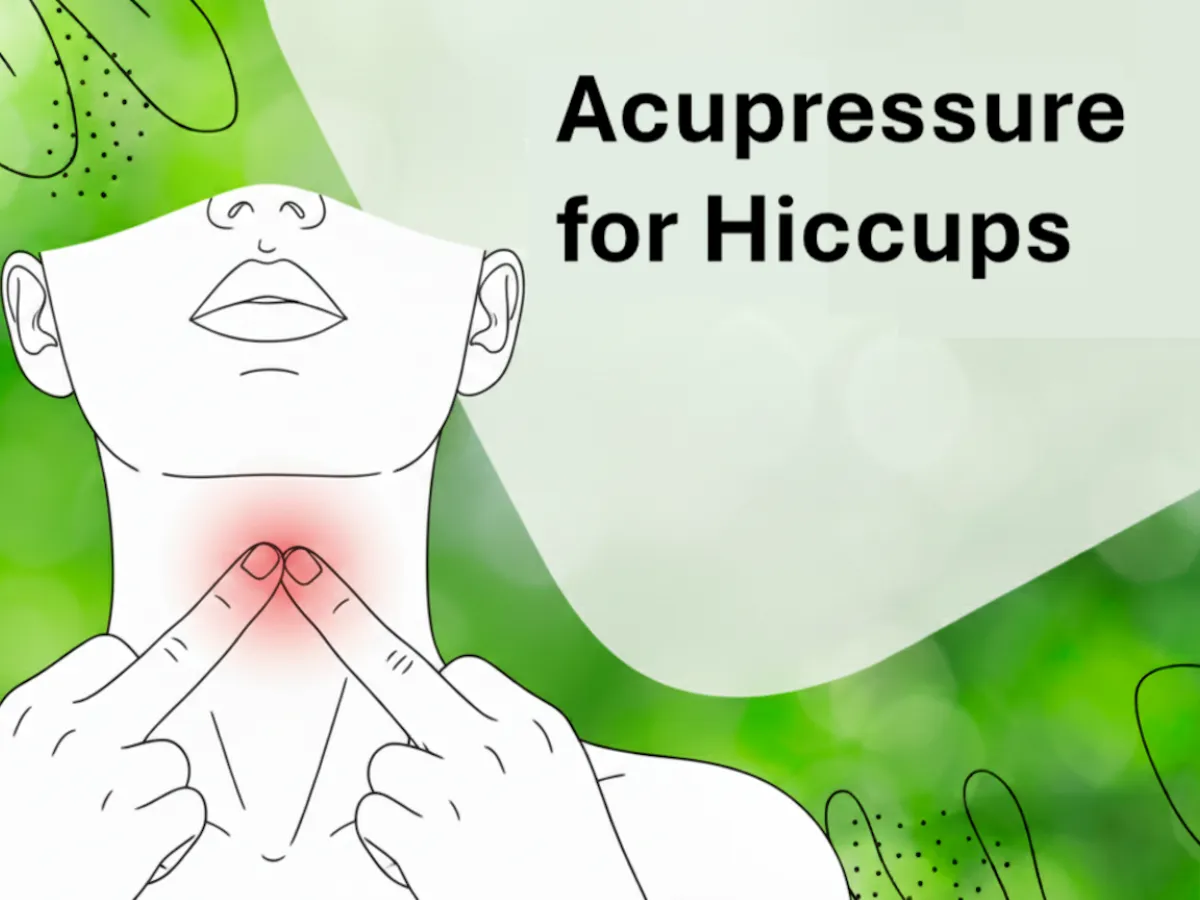
The Hiccup routine has the order and timings. Two ideas sit behind it. Most bouts stop by themselves within minutes, so the routine is short and gentle: a few minutes of slow breathing and light pressure, not force. And the main point, CV-22, sits right in front of the windpipe, so it is touched, never pressed in.
- Sit comfortably and breathe slowly and evenly for a minute.
- Rest one fingertip very lightly in the hollow of CV-22 for about 30 seconds while you swallow. Do not push inward or deeply. Skip this point after neck surgery.
- For the other points, press with your thumb or fingertip, straight into the skin. The pressure should be firm, steady and noticeable, but never painful. Start lighter until you know how much feels right.
- Hold each point for 15 to 30 seconds to begin with, and work up to 1 to 2 minutes. Do both sides for points that come in pairs. BL-13 is hard to reach on yourself: ask someone to press it, or lean it against the back of a chair, and skip it rather than strain.
Don't press on broken, irritated or blistered skin, bruises or new scars, or on an area that has not healed after surgery. If you have a bleeding or clotting disorder or low platelets, press more lightly and for less time, or ask your doctor first.
Alongside the points
MedlinePlus lists some familiar home remedies: breathing into a paper bag, sipping cold water, holding your breath, or gargling with ice water. There is no proof that they work, but they are not harmful, so you can try them.
Certain medicines can cause hiccups. Talk to your provider before changing or stopping any medicine.
When hiccups need help
Contact your health care provider if hiccups last more than a few days or keep coming back. Chronic hiccups can get in the way of sleeping, eating, drinking and talking.
They can also have a cause behind them, such as a medicine, abdominal surgery, or a nerve or metabolic problem. If a provider finds one, treating that cause may help; if not, there are medicines and other procedures they can discuss with you. Acupressure is not a reason to wait.
See also when not to self-treat.