What fatigue is
MedlinePlus describes fatigue as a feeling of weariness, tiredness or lack of energy. It is not the same as drowsiness, the need to sleep. Fatigue is often a normal response to physical exertion, emotional stress, boredom or lack of sleep, and most of the time it is not a sign of a serious disease.
It can also have a cause worth finding. MedlinePlus lists anemia and iron deficiency, depression or grief, ongoing pain, sleep problems, thyroid problems, and alcohol or drug use. Some medicines can cause it, among them antihistamines, sedatives, some antidepressants, blood pressure medicines, steroids and diuretics. It also comes with many longer-term illnesses, such as diabetes, heart, kidney or liver disease, and infections. When fatigue lasts at least 6 months, doesn't get better with rest and has no other cause, it may be chronic fatigue syndrome, which a provider diagnoses.
The Fatigue page is the reference; this post explains the routine and the evidence behind it. Related pages: Insomnia and Low Mood and Depression.
When tiredness needs a check first
MedlinePlus says fatigue that doesn't get better with enough sleep, good food and a low-stress life should be checked by a provider, because it can be a sign of another problem.
Thoughts of self-harm: if you have thoughts of hurting yourself or of suicide, get help right away: call your local emergency number. In the United States, you can also call or text 988, the Suicide & Crisis Lifeline, at any hour.
Contact a provider right away if you are tired and also have confusion or dizziness, blurred vision, or little or no urine, or recent swelling and weight gain.
Make an appointment if you have:
- unexplained weakness or fatigue, especially with a fever, weight loss you didn't intend, or regular sweats;
- constipation, dry skin, weight gain, or trouble with the cold;
- sleep that is broken many times a night, or ongoing trouble sleeping;
- headaches, or feelings of sadness or depression;
- a medicine, prescribed or not, that may cause tiredness. Don't stop or change it without talking to your provider.
A provider will ask about your health, sleep, mood and habits, examine you, and may order blood or urine tests. See also when not to self-treat.
What research says
We found no Cochrane review of acupressure or acupuncture for everyday tiredness or for chronic fatigue syndrome, so little high-quality research exists. MedlinePlus's own advice for fatigue is sleep, food, exercise and less stress, and finding the cause when those don't help. So the points below are tradition, labelled as such: a short practice to use alongside that, not in place of it.
The points
Traditional use: in TCM, points such as ST-36, CV-6 and SP-6 are traditionally used for tiredness and low energy. Each point's page shows where to find it and when to skip it.
- Main points: ST-36 Leg Three Miles (Zú sān lǐ) below the knee, CV-6 Sea of Qi (Qì hǎi) below the navel, and SP-6 Three Yin Intersection (Sān yīn jiāo) on the inner lower leg.
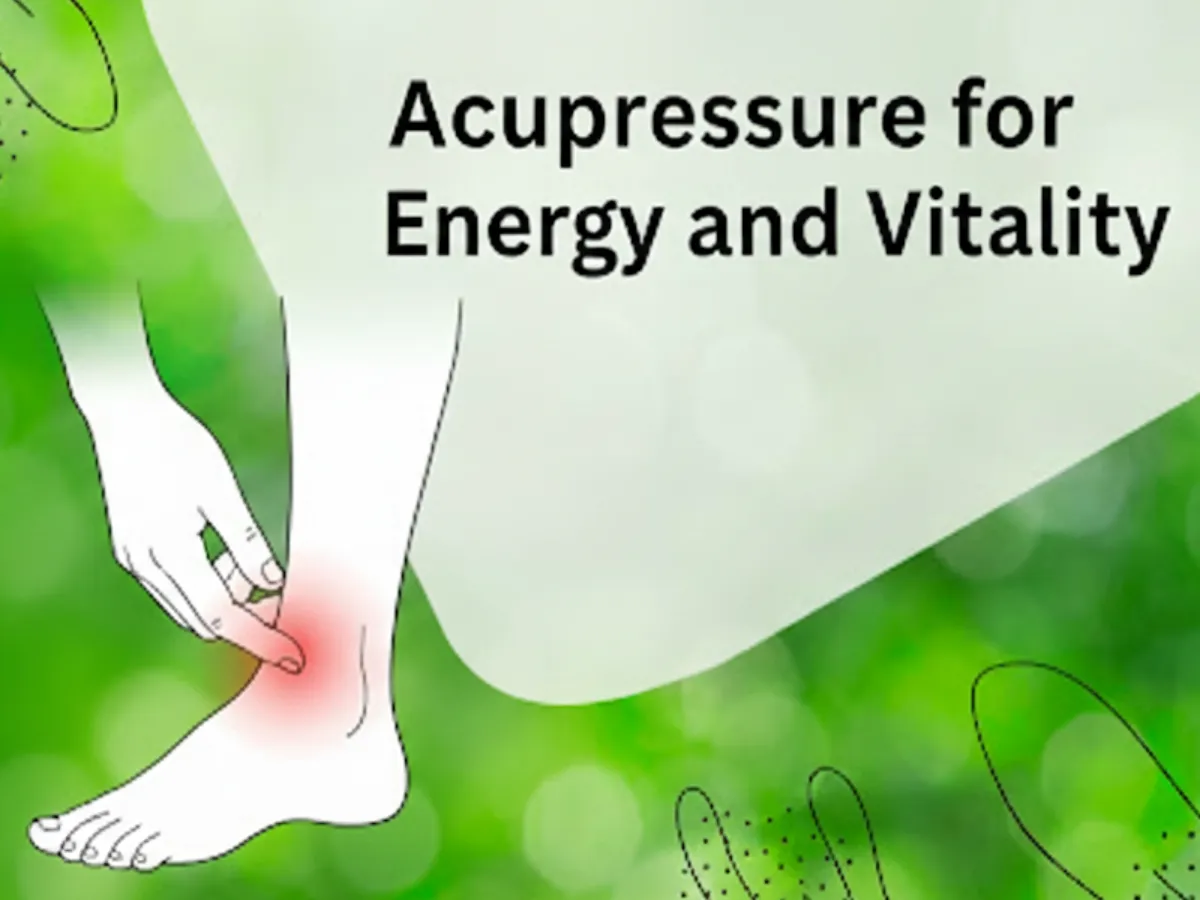
- For deep exhaustion: KI-3 Supreme Stream (Tài xī) at the inner ankle.
- On the back, optional: BL-20 Spleen Shu (Pí shū) and BL-23 Kidney Shu (Shèn shū), easier with a helper.
How to press
The Fatigue routine takes about 10 minutes. The idea behind it: it is a short, wakeful practice, done sitting upright at a time when you can pay attention, not lying down to rest. It opens with slow breathing, keeps the firmer pressure for the legs, where the main points are easy to reach, and is gentle on the belly. It is not a replacement for sleep, and MedlinePlus notes that stimulants such as caffeine don't fix fatigue and can make it worse once you stop them. If you are tired every day, the habits below and a provider's check matter more than any point.
- Choose a time when you can focus.
- Sit upright with your feet flat on the floor and breathe slowly: in for 4 counts, out for 6, five times.
- Massage ST-36 vigorously for 1 to 2 minutes on each leg, firm but never painful.
- Press CV-6 slowly and lightly for 1 to 2 minutes while breathing out. Never push deep into the belly.
- Press SP-6 for 1 minute on each leg, into the soft tissue beside the shin bone rather than on the bone.
- For deep exhaustion, add KI-3 for 1 minute at each ankle, pinching gently beside the bone rather than on it.
- Optional: add BL-20 on the back, with gentle, steady pressure. If you can't reach it comfortably, skip it or ask a helper.
- Finish with gentle neck rolls and shoulder shrugs.
If you are new to it, hold each point for 15 to 30 seconds and work up to the times above. Pressure should never be painful.
Pregnancy: CV-6 and SP-6 are not pressed during pregnancy. Ask a trained professional instead.
Skip or ease off: CV-6 with sudden or severe belly pain: get medical care instead. ST-36 and SP-6 after leg surgery, and ST-36 with an injury or infection of the lower leg. KI-3 after ankle surgery or with a fresh sprain. BL-23 over a recent back injury or surgery. Don't press on broken, irritated or blistered skin, bruises or new scars. If you have a bleeding or clotting disorder or low platelets, press more lightly and for less time, or ask your doctor first.
Habits that help
MedlinePlus lists these home-care steps for fatigue:
- get enough sleep each night;
- eat a healthy, balanced diet and drink plenty of water through the day;
- exercise regularly;
- find ways to relax, such as yoga or meditation, and keep a reasonable work and personal schedule;
- avoid alcohol, nicotine and drugs.
When fatigue comes with ongoing pain or depression, getting care for those often helps the tiredness too. And since some medicines cause fatigue, ask your provider whether one of yours may play a part.