What the numbers mean
Blood pressure is the force of your blood pushing against the walls of your arteries as your heart pumps. A reading has two numbers: the top one (systolic) and the bottom one (diastolic). The CDC gives these ranges:
- Normal: less than 120/80 mm Hg.
- Elevated: a top number of 120 to 129 and a bottom number under 80.
- High blood pressure (hypertension): consistently at or above 130/80.
Most people with high blood pressure have no signs or symptoms, so many do not know they have it. The only way to know is to measure it regularly. Over time it can damage the heart, blood vessels and kidneys, and it raises the risk of heart attack, heart failure, stroke and chronic kidney disease.
The CDC and MedlinePlus list these risk factors: a diet high in sodium (salt) and low in potassium, too little physical activity, too much alcohol, tobacco and nicotine, diabetes, overweight, pregnancy, age, family history, long-term stress, and certain medicines. Most of the time no single cause is found. The High Blood Pressure page is the reference; this post explains the routine behind it.
When a reading is an emergency
The CDC calls a reading higher than 180 (top) and/or higher than 120 (bottom) a hypertensive emergency when it comes with any of these: chest pain, shortness of breath, back pain, numbness, weakness, a change in vision, or difficulty speaking. Call your local emergency number. Do not stop to try acupressure first.
The same goes for the signs of a heart attack or a stroke, which high blood pressure makes more likely:
- Heart attack (CDC): chest pain or discomfort that lasts more than a few minutes or goes away and comes back; feeling weak, light-headed or faint, sometimes with a cold sweat; pain or discomfort in the jaw, neck, back, or one or both arms or shoulders; shortness of breath. Unusual tiredness and nausea or vomiting are more common in women.
- Stroke (CDC): sudden trouble walking, dizziness or loss of balance; sudden trouble seeing; sudden numbness or weakness in the face, arm or leg, especially on one side; sudden confusion or trouble speaking or understanding; a sudden severe headache with no known cause. Note the time the symptoms started, and do not drive to the hospital: wait for the ambulance.
More signs to watch for are on when not to self-treat.
Medical care comes first
MedlinePlus notes that most of the time high blood pressure can be controlled with medicine and lifestyle changes, and that the goal is set with your provider, based on your age and other conditions. If you have been prescribed medicine, it is very important to take it; if it gives you side effects, tell your provider rather than stopping. Never stop or change blood pressure medicine without your doctor. Acupressure does not replace it.
If you have high blood pressure, see your provider for regular follow-up, and contact them right away if home monitoring shows your blood pressure is still high. If you are pregnant, keep high readings for your prenatal provider: pregnancy is one of the causes MedlinePlus lists.
What research says
A 2018 Cochrane review (Yang and colleagues) looked at acupuncture for high blood pressure: 22 randomized trials with 1,744 people, most at high risk of bias because they were not blinded. It found no evidence of a lasting blood-pressure-lowering effect: the only trial that looked for one found none at three and six months. Short-term effects, over one to 24 hours, are uncertain because the evidence is of very low quality. Trials that compared acupuncture with blood pressure medicines seemed to favour acupuncture, but the authors judged that most likely a reflection of bias, not a true effect.
We found no review of acupressure on the body points used here. So the routine below is tradition, labelled as such: a quiet 10 minutes alongside medical care, not a way to bring your numbers down. A lower reading right after it would tell you nothing about your blood pressure over time.
The points
Traditional use: in TCM, points such as GB-20, LR-3 and KI-3 are traditionally used as part of regular, ongoing care for high blood pressure. Each point's page shows where to find it and when to skip it.
How to press
The High Blood Pressure routine takes about 10 minutes, ideally at the same time each day in a quiet place. The idea behind it: long-term stress is one of the risk factors the CDC names, and managing stress is one of the steps it lists, so the routine is a slow, quiet practice. It opens with breathing and keeps every point moderate.
- Keep taking your prescribed blood pressure medicine as your doctor directed.
- Sit comfortably and breathe slowly and deeply for 5 minutes.
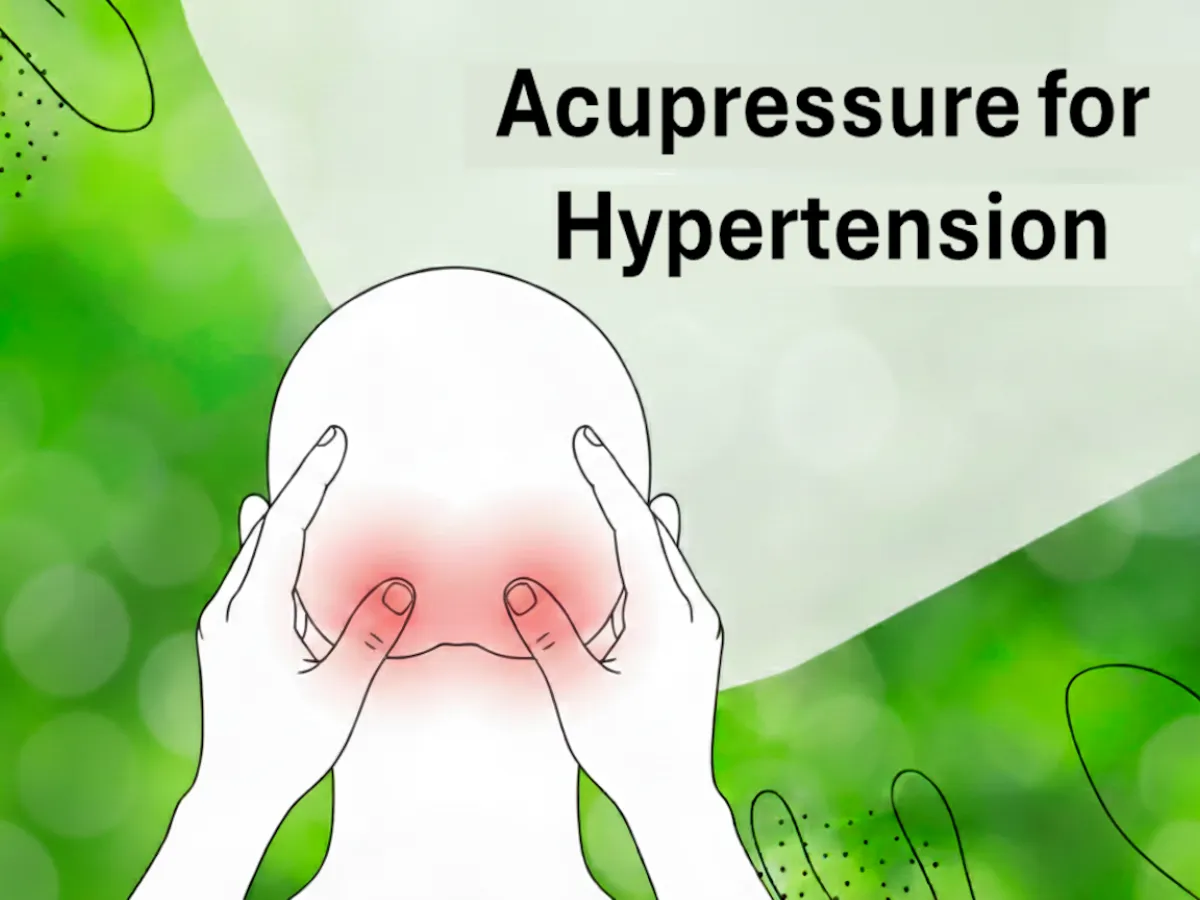
- Press GB-20 upward toward the skull with both thumbs, not into the neck, with moderate pressure, 2 minutes.
- Press LR-3 beside the pulse rather than hard on it, 1 minute on each foot.
- Press KI-3 gently, 1 minute on each ankle.
- Optional: PC-6, 1 minute on each arm.
- Optional: SP-6, if you are not pregnant.
Pressure should be firm enough to feel but never painful, and never deep or unrelenting.
Skip or ease off: skip GB-20 if your blood pressure is very high, after a neck injury, with neck instability or a clotting disorder, and stop if you feel dizzy. LR-3 after foot surgery or with very low blood pressure. KI-3 after ankle surgery or with a fresh sprain or injury. PC-6: ease off if the fingers tingle, and skip it after a wrist injury or surgery. Don't press SP-6 during pregnancy, or after leg surgery. Don't press on broken or irritated skin, bruises or new scars.
Day to day
From the CDC and MedlinePlus:
- be active: about 30 minutes a day, 5 days a week;
- eat a heart-healthy diet and limit sodium (salt) and alcohol;
- don't smoke or use tobacco;
- keep a healthy weight;
- manage stress;
- if you measure at home, use a good, well-fitting monitor, practise with your provider, sit relaxed for five minutes or more before a reading, and bring the monitor to your appointments so it can be checked.
Readings vary with the time of day, so one number on its own means little. Ask your provider what your goal is.