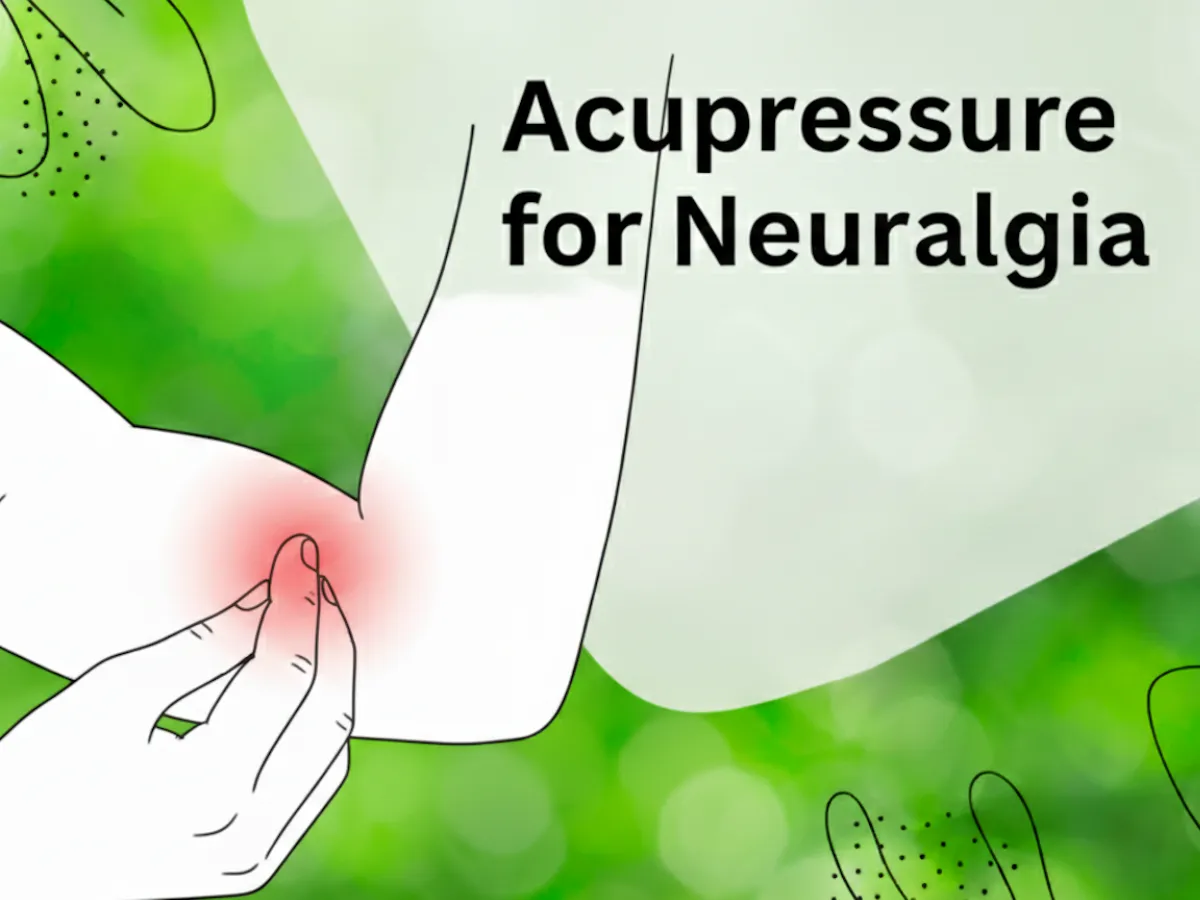
 Acupressure for Neuralgia Relief
ACUPRESSURE_FOR_NEURALGIA
Acupressure for Neuralgia: Natural Approach to Calming Nerve Pain
Key Pressure Points (LI4, GB20) to Soothe Irritated Nerves and Reduce Shooting Pain
 Acupressure_Guide
Acupressure for Neuralgia: A Natural Approach to Calming Nerve Pain
Neuralgia—sharp, burning, or shooting pain caused by irritated or damaged nerves—can be life-disrupting. Whether it appears as trigeminal neuralgia, post-herpetic neuralgia, diabetic nerve pain, or generalized nerve irritation, the discomfort can be intense and unpredictable.
While medical care is essential for diagnosing and managing the underlying cause, many people look for natural, supportive methods to ease pain.
One of the most effective holistic practices is acupressure, a gentle technique that uses finger pressure on specific points to relax the nervous system and soothe pain pathways.
This guide explores how acupressure may help with neuralgia, the best pressure points for nerve pain relief, and how to practice safely at home.
What Is Neuralgia?
Neuralgia is nerve-related pain that may feel like:
Sharp shooting sensations
Electric shock–like jolts
Burning or tingling
Hypersensitivity to touch
Radiating pain along a nerve pathway
Common types include:
Trigeminal neuralgia (facial nerve pain)
Occipital neuralgia (back-of-head pain)
Post-herpetic neuralgia (shingles-related nerve damage)
Peripheral neuropathic pain (often from diabetes, injury, or inflammation)
How Acupressure Supports Neuralgia Relief
Acupressure may help reduce nerve pain by:
Relaxing muscles surrounding irritated nerves:
Tight muscles can press on nerves; releasing tension may reduce symptoms.
Improving circulation:
Better blood flow helps nourish nerves and reduce inflammation.
Calming the nervous system:
Acupressure activates the body’s natural pain-control pathways and reduces stress—a major aggravator of nerve pain.
Supporting emotional relief:
Chronic nerve pain often leads to anxiety or fatigue; acupressure promotes grounding and relaxation.
Acupressure is non-invasive, drug-free, and safe as a complementary tool.
Best Acupressure Points for Neuralgia Relief
Below are commonly used points for reducing nerve pain throughout the body.
1. LI4 — Large Intestine 4 (Hegu)
Location: Web between thumb and index finger.
Benefits: Reduces pain throughout the body, calms nerve irritation.
Technique: Press firmly for 60 seconds.
(Avoid during pregnancy.)
2. GB20 — Gallbladder 20 (Fengchi)
Location: Back of the head, in the hollows below the skull base.
Benefits: Helpful for trigeminal, occipital, and facial neuralgia; relieves headaches and nerve tension.
Technique: Apply upward pressure with thumbs for 1–2 minutes.
Location: Two finger widths above the wrist crease on the outer arm.
Benefits: Helps radiating nerve pain in the arms, neck, head, and shoulders.
Technique: Apply firm pressure with thumb for 1 minute each side.
Location: Top of the foot, in the groove between the big toe and second toe.
Benefits: Calms the nervous system, relaxes spasms, reduces chronic nerve tension.
Technique: Press and hold for 60–90 seconds.
5. GB34 — Gallbladder 34 (Yanglingquan)
Location: Outer side of the lower leg, below the knee.
Benefits: Helps sciatic pain, leg nerve pain, and muscle tightness around irritated nerves.
Technique: Apply steady pressure for 60–90 seconds.
6. BL23 & BL47 — Bladder Points (Kidney Shu & Will’s Chamber)
Location: Lower back, beside the spine.
Benefits: Strengthen nerve function and support chronic lower back nerve pain.
Technique: Use gentle knuckle pressure or a massage ball against a wall.
7. GV20 — Governing Vessel 20 (Baihui)
Location: Crown of the head.
Benefits: Calms the central nervous system and reduces pain sensitivity.
Technique: Apply gentle circular pressure for 30–60 seconds.
Simple Acupressure Routine for Neuralgia (5–7 Minutes)
Start with GV20 (30–60 seconds) to calm the nervous system.
Press LI4 on both hands (1 minute each).
Add area-specific points:
Facial neuralgia → GB20, SJ5
Sciatic/lower body nerve pain → GB34 + LV3
General nerve tension → LV3 + LI4
Finish with slow breathing for 1 minute.
Repeat 1–2 times daily for best results.
Safety Tips for Using Acupressure for Neuralgia
Acupressure is safe when used correctly. Keep in mind:
Use gentle, steady pressure—never force.
Avoid pressing on bruised, swollen, or infected areas.
Stop if pain significantly increases.
For shingles-related neuralgia, avoid direct pressure on active rash.
Pregnant individuals should avoid LI4 and consult a professional.
Always maintain communication with your healthcare provider for chronic or severe nerve pain.
When to See a Doctor
Seek medical guidance if neuralgia comes with:
Muscle weakness
Loss of sensation
Sudden or severe pain
Rash or fever
Difficulty speaking, chewing, or moving
Pain after injury or accident
Acupressure supports comfort, but the underlying cause of neuralgia must still be evaluated.
Final Thoughts: A Gentle, Natural Support for Nerve Pain
Neuralgia can be overwhelming, but acupressure provides a simple, natural, and empowering tool to complement your care. With regular practice, acupressure can help relax nerve pathways, reduce discomfort, and improve overall wellbeing.