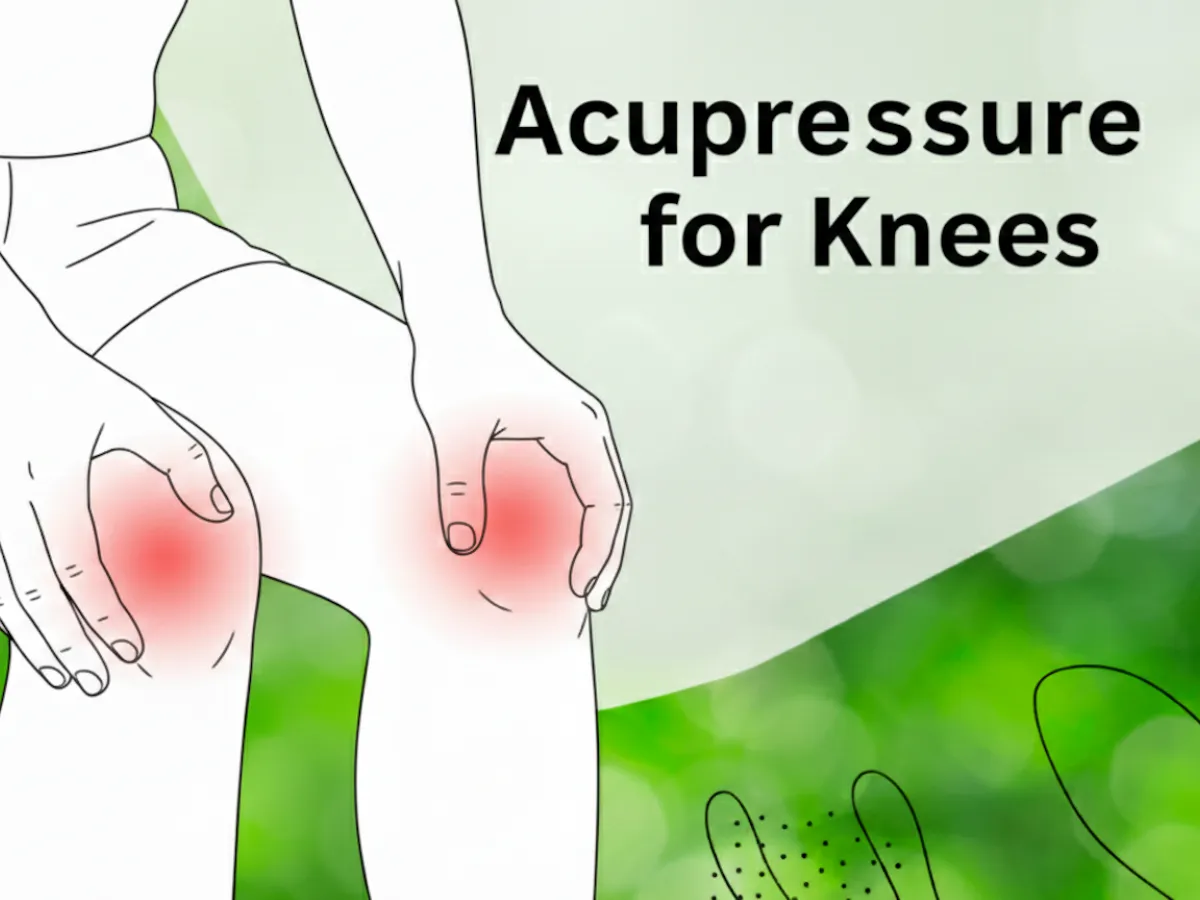
 Acupressure Releases Knee Pain
ACUPRESSURE_FOR_KNEE_PAIN
Acupressure for Knee Pain: Natural Relief for Joint Stiffness
Key Pressure Points (Xiyan, ST35) to Reduce Swelling, Ease Arthritis, and Boost Mobility
 Acupressure_Guide
Acupressure for Knee Pain: Natural Relief for Joint Stiffness, Inflammation & Mobility Issues
Knee pain is one of the most common musculoskeletal complaints—affecting people of all ages. Whether the cause is arthritis, overuse, tendon strain, injury, or everyday wear and tear, knee discomfort can make walking, bending, and exercising difficult.
Acupressure offers a natural, non-invasive way to ease knee pain, reduce inflammation, and improve flexibility. It’s easy to do at home and works beautifully alongside stretching, physical therapy, heat/cold therapy, and mobility exercises.
In this guide, you’ll learn how acupressure supports knee health, the best acupressure points for knee pain, and a step-by-step routine you can start using today.
Why Acupressure Helps Knee Pain
Acupressure works on key points that influence muscles, ligaments, nerves, and circulation around the knee. It can help with:
Reducing inflammation and swelling:
Gentle stimulation encourages better fluid movement around the joint.
Improving blood flow to support healing:
More circulation brings oxygen and nutrients to injured tissues.
Relaxing tight or imbalanced muscles:
When quads, hamstrings, and calves tighten, they pull on the knee. Acupressure helps release this tension.
Easing pain and discomfort:
Pressure points activate the body’s natural pain-relief response.
Supporting joint mobility:
Loosening surrounding tissues allows the knee to bend and straighten more comfortably.
Best Acupressure Points for Knee Pain Relief
These are the most effective traditional acupressure points for reducing knee pain from arthritis, overuse, tight muscles, or general strain.
1. ST35 — Stomach 35 (Dubi / Calf’s Nose)
Location:
Just below the kneecap, on the outer side of the knee joint.
Benefits:
Reduces knee swelling
Relieves pain around the patella
Improves mobility
How to apply:
Press gently for 1–2 minutes on each knee.
2. Xiyan EXT39—“Eyes of the Knee” (Medial & Lateral Knee Points)
Location:
Two points around the kneecap—one inside, one outside.
Benefits:
Excellent for arthritis
Helps stiffness and soreness
Enhances circulation
How to apply:
Use your thumbs to apply firm pressure to both “eye” points for 1–2 minutes.
3. SP9 — Spleen 9 (Yinlingquan)
Location:
On the inner lower leg, just below the knee.
Benefits:
Reduces fluid retention and swelling
Helps inner knee pain
How to apply:
Apply pressure for 60–90 seconds.
4. GB34 — Gallbladder 34 (Yanglingquan)
Location:
On the outer lower leg, just below the knee.
Benefits:
Addresses tight muscles around the knee
Supports tendon and ligament health
Great for lateral knee pain
How to apply:
Press for 1 minute on each leg.
5. ST36 — Stomach 36 (Zusanli)
Location:
3 inches below the kneecap, slightly to the outside of the shin.
Benefits:
Reduces knee weakness
Helps chronic pain
Boosts circulation
How to apply:
Use a firm circular motion for 1–2 minutes.
6. BL40 — Bladder 40 (Weizhong)
Location:
Center of the back of the knee (knee crease).
Benefits:
Eases stiffness
Helps sciatica-related knee pain
Relaxes tight hamstrings
How to apply:
Gently press with thumbs for 1 minute.
(Avoid deep pressure if varicose veins are present.)
Simple Acupressure Routine for Knee Pain (5–7 Minutes)
Try this once or twice daily for best results.
Step 1 — Warm Up the Tissue
Rub the knee area for 20–30 seconds to loosen circulation.
Step 2 — Press Xiyan and ST35
Apply pressure to the “eyes of the knee” and outer patella point (ST35) for 1–2 minutes.
Step 3 — Work GB34 and SP9
These lower-leg points reduce tension around the joint.
Step 4 — Activate ST36
Press for 1 minute to support strength and healing.
Step 5 — Finish with BL40
Helps release tight hamstrings that often contribute to knee pain.
Repeat on both legs even if only one knee hurts—this supports structural balance.
Tips for Safe and Effective Acupressure
Start with gentle pressure, especially around swollen or sensitive knees.
Never press directly on injured, bruised, or inflamed tissue.
Avoid pressing the back of the knee if you have varicose veins, DVT risk, or swelling.
Hydrate after sessions to help tissue recovery.
Pair acupressure with stretching for quads, hamstrings, and calves for maximum benefit.
Great for Many Types of Knee Pain
Acupressure may help with:
Mild arthritis pain
Tendon strain
Iliotibial (IT) band tightness
Kneecap tracking discomfort
Overuse injuries
Stiffness from sitting or activity
Meniscus irritation (mild)
General inflammation
It’s supportive—not a replacement for medical care—but works wonderfully as part of a daily wellness routine.
When to Seek Medical Attention
Consult a professional if you experience:
Sharp or severe pain
Knee giving out or locking
Significant swelling or redness
Pain after an accident or fall
Numbness or tingling
Difficulty bearing weight
Acupressure can support healing, but serious injuries need evaluation.
Final Thoughts: A Natural Way to Improve Knee Comfort
Acupressure offers a simple, safe, and effective way to ease knee pain and improve mobility. With just a few minutes of daily practice, you can reduce stiffness, boost circulation, and support long-term knee health.