A toothache has a cause
A toothache is pain in or around a tooth. MedlinePlus lists the usual causes: tooth decay, an infected or abscessed tooth, a worn, injured or cracked tooth, an injury to the jaw or mouth, and grinding your teeth. Pain felt in a tooth can also come from somewhere else, such as an earache or a sinus infection.
That shapes what acupressure can do here. Pressing a point does not fill a cavity or clear an infection; the dentist finds and fixes the cause. Acupressure is self-care for the hours or days until that appointment, and for jaw muscles that are tight from clenching.
The Dental Pain page is the reference; this post explains the routine and the evidence behind it.
Jaw pain or the heart?
A heart attack can cause jaw pain, neck pain or toothache. The CDC lists pain or discomfort in the jaw, neck or back among its major signs, with chest pain or discomfort, feeling weak, light-headed or faint, pain in one or both arms or shoulders, and shortness of breath.
If jaw or tooth pain comes with any of those, call your local emergency number now. Do not press points first.
What research says
We found no Cochrane review of acupressure, or of acupuncture, for toothache.
So for toothache, little high-quality research exists, and the points below are tradition, labelled as such.
The points
Traditional use: in TCM, points such as LI-4, ST-6 and ST-7 are traditionally used for toothache and jaw pain. Each point's page shows where to find it and when to skip it.
- Main points: LI-4 Joining Valley (Hé gǔ) on the back of the hand, ST-6 Jaw Bone (Jiá chē) on the chewing muscle, and ST-7 Below the Joint (Xià guān) in front of the ear.
- For upper tooth pain: SI-18 Cheek Bone Hole (Quán liáo) below the cheekbone.
- For lower tooth pain: ST-44 Inner Courtyard (Nèi tíng) on the foot, or GV-26 Man's Middle (Rén zhōng) above the upper lip.
LI-4 and ST-44 are far from the mouth, so you can press them even when the face is too sore to touch.
How to press
The Dental Pain routine has the order and timings. Two ideas sit behind it. Start away from the sore spot, on the hand, then move to the jaw. And the jaw points sit on and beside the jaw joint, so they get light pressure and small circles, never force.
- Sit comfortably and breathe slowly for a minute.
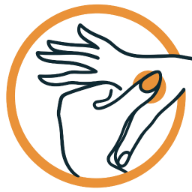
- Press LI-4 on each hand with the thumb of the other hand: firm, steady and noticeable, but never painful. Do not press LI-4 during pregnancy.
- Massage ST-6 and ST-7 in small circles with a fingertip. Keep ST-7 light, with the mouth closed. Stop at once if the jaw clicks, locks or hurts, and skip both points after jaw surgery, an injury or a dislocation.
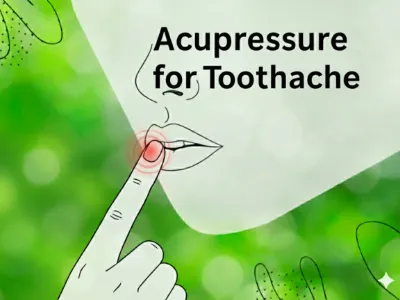
- For upper tooth pain, rest a fingertip lightly on SI-18. For lower tooth pain, press ST-44 or touch GV-26 lightly.
- Hold each point for 15 to 30 seconds to begin with, and work up to 1 to 2 minutes. Do both sides for points that come in pairs.
Don't press on broken, irritated or blistered skin, bruises or new scars, or over a swollen or infected area of the face. If you have a bleeding or clotting disorder or low platelets, press more lightly and for less time, or ask your doctor first.
When to see a dentist
MedlinePlus says to get care if you have:
- a severe toothache;
- a toothache that lasts longer than a day or two;
- a fever, an earache, or pain when you open your mouth wide.
A dentist is usually the right person for a toothache. If the pain comes from somewhere else in the body, you may need your primary care provider instead. Acupressure is not a reason to wait.
To lower the chance of the next one: floss, brush with fluoride toothpaste, keep sugar low, have your teeth cleaned regularly, and tell your dentist if you might grind your teeth.
See also when not to self-treat.