What tinnitus is
Tinnitus means hearing a noise in your ears that has no outside source. MedlinePlus describes it as ringing, but it can also sound like roaring, clicking, hissing or buzzing. It may be soft or loud, high or low, in one ear or both. Almost everyone notices a mild form now and then, and it usually lasts a few minutes. When it is constant or keeps coming back, it can be stressful and make it harder to focus or sleep.
Tinnitus is a symptom, not a disease of its own. MedlinePlus lists among its causes:
- ear wax or something in the ear, ear and sinus infections, and a problem with the tube between the middle ear and the throat;
- hearing loss, including hearing loss with age, and exposure to loud noise;
- Meniere disease, an inner ear disorder with hearing loss and dizziness;
- certain medicines, such as some antibiotics and aspirin;
- heart or blood vessel problems, high blood pressure, anemia, thyroid problems, hormonal changes in women, a jaw joint disorder (TMJ) and head injury;
- rarely, a serious problem such as a tumor or an aneurysm.
Alcohol, caffeine and smoking can make existing tinnitus worse. The Tinnitus (Ringing in the Ears) page is the reference; this post explains the routine behind it.
When to see a provider first
Because tinnitus can have so many causes, finding yours comes before any home practice. MedlinePlus advises contacting your health care provider if:
- you have sudden, severe hearing loss or ringing in the ears;
- the noises started after a head injury;
- the noises come with other unexplained symptoms, such as dizziness, feeling off balance, nausea or vomiting;
- you have new headaches, weakness, or numbness anywhere on your body;
- the noise is in one ear only and goes on for several weeks or longer;
- the noise is pulsatile: a rhythmic sound that follows a steady beat;
- your hearing is worse in one ear than the other, or you have ear pain along with hearing problems;
- the noises still bother you after you have tried self-help.
A provider may test your hearing and, depending on what they find, order a head scan or blood vessel tests. Bring a list of your medicines, since some can cause ear noises, but don't stop any medicine without talking to your provider first. See also when not to self-treat.
What research says
We found no current Cochrane review of acupuncture or acupressure for tinnitus, so little high-quality research exists. MedlinePlus says alternative therapies for tinnitus have not been proven, and advises talking to your provider before trying them. It also notes that no medicine works for everyone. What helps some people is fixing the cause when one is found (for example, removing ear wax), a hearing aid, a tinnitus masker worn like a hearing aid, and counseling or biofeedback to learn to live with the noise. So the points below are tradition, labelled as such: a calm few minutes alongside care, not a way to switch the noise off.
The points
Traditional use: in TCM, points such as TE-17, GB-2 and TE-5 are traditionally used for ringing in the ears. Each point's page shows where to find it and when to skip it.
- Main points: TE-17 Wind Screen (Yì fēng) behind the earlobe, GB-2 Hearing Convergence (Tīng huì) in front of the ear, and TE-5 Outer Pass (Wài guān) on the back of the forearm.
- For neck tension: GB-20 Wind Pool (Fēng chí) below the base of the skull.
- Optional: SI-19 Palace of Hearing (Tīng gōng), just in front of the small flap of the ear.
How to press
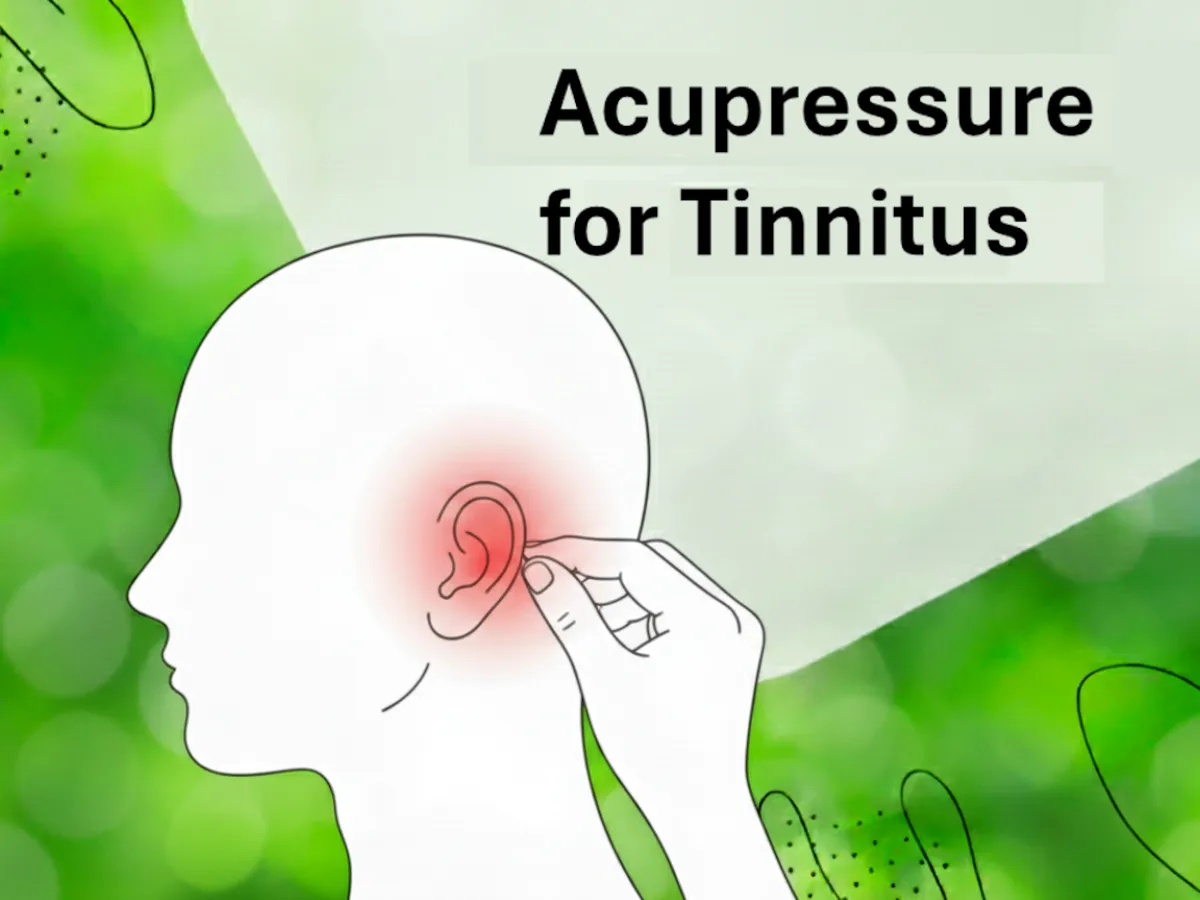
The Ear Ringing routine takes about 5 minutes, once a day. The idea behind it: MedlinePlus notes that it isn't known whether stress causes tinnitus, but feeling stressed or anxious can make it worse, and learning ways to relax is part of home care. So the routine is a quiet, unhurried practice, not a test of whether the noise has changed. The points around the ear sit close to the ear canal, the jaw joint and a facial nerve, so they get the lightest touch; the forearm point takes steadier pressure.
- Sit quietly somewhere calm and breathe slowly.
- Press TE-17 very gently in the hollow behind the earlobe, then GB-2 in front of the ear with gentle, steady pressure.
- Press TE-5 on the back of the forearm, steady and comfortable.
- For neck tension: add GB-20, pressing upward toward the skull, not into the neck.
- Optional: press SI-19 lightly, with the mouth slightly open.
That is about a minute per point. Pressure should be firm enough to feel but never painful, and never deep or unrelenting. Press on the outside only; never put a finger into the ear canal.
Skip or ease off: TE-17, GB-2 and SI-19 with an ear infection, a perforated eardrum or after ear surgery; TE-17 also after facial surgery or during severe jaw joint (TMJ) symptoms, and stop if your face twitches. GB-2 and GB-20 if you feel dizzy. GB-20 after a neck injury, with neck instability or very high blood pressure. TE-5 after forearm surgery, with an arm fracture or an acute tendon injury, and stop if tingling spreads to your hand. Don't press on broken, irritated or blistered skin, bruises or new scars. If you have a bleeding or clotting disorder or low platelets, press more lightly and for less time, or ask your doctor first; GB-20 is skipped with a clotting disorder.
Day to day
Tinnitus is often more noticeable at bedtime, when the room is quiet. MedlinePlus suggests background sound to mask it, such as a white noise machine or a running humidifier. Its home care list also includes:
- learning ways to relax;
- avoiding things that can make tinnitus worse, such as caffeine, alcohol and smoking;
- getting enough rest, and sleeping with your head propped up, which can make the noise less noticeable;
- protecting your hearing: avoiding loud places and sounds, and wearing earplugs when you need them.
If a jaw joint problem is behind your tinnitus, MedlinePlus notes that a dentist may suggest a dental appliance or exercises for teeth clenching and grinding. Tinnitus can be managed, and a provider can help you build a plan that works for you.